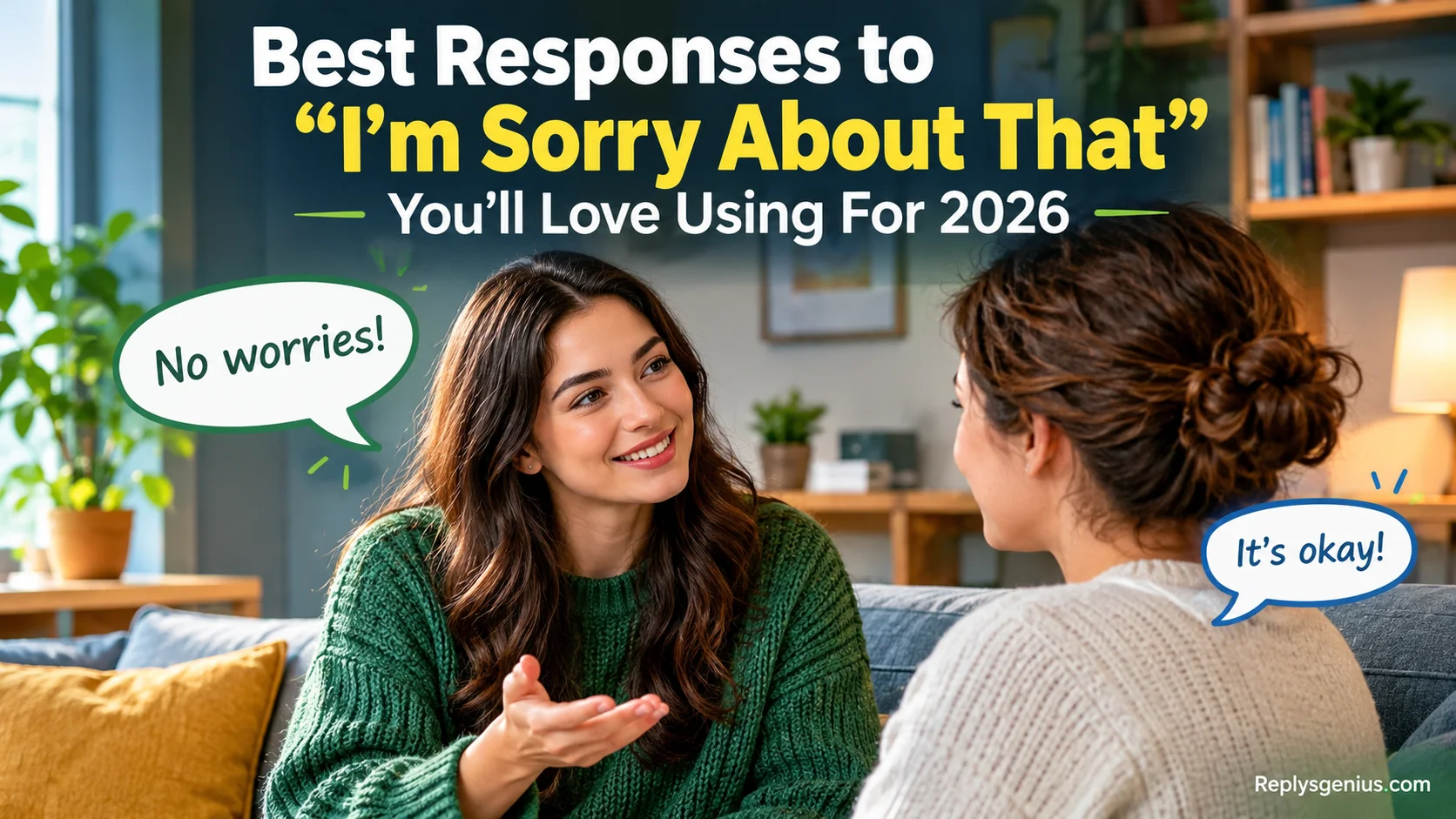
Explore Best Responses to “I’m Sorry About That”: You’ll Love Using For 2026 to find thoughtful replies for everyday conversations and relationships. When someone apologizes, your response should match the situation, your relationship, and the tone of interaction. A simple “no problem” or “it’s okay” may suit a minor mistake, while a serious issue deserves a sincere response filled with kindness, maturity, and empathy. Choosing the right words helps you show understanding, offer forgiveness, and maintain healthy communication. Whether you need polite responses, funny replies, casual responses, or professional responses, choose words that respect the other person and keep the conversation natural.
Not every apology needs a serious discussion. In personal chats, casual texting, and friendly conversations, witty replies, lighthearted responses, and a clever funny comeback can ease an awkward moment. You could say, “You’re forgiven, but I accept flowers as an apology!” or “Apology accepted. Snacks are your punishment.” These creative response ideas bring humor, sarcasm, and playful teasing into the conversation without hurting anyone’s feelings. If there’s romantic interest or flirting, try a cute reply such as, “It’s okay. You can make it up to me with extra attention.” For deeper moments, use heartfelt responses, comforting words, and supportive language to show that you care. The best natural response reflects your personality, matches the other person’s mood, and helps keep conversation going. Whether you want to make someone laugh or strengthen your relationship, choose a reply that feels genuine rather than forced.
In workplace communication, a calm answer and professional etiquette matter. Phrases such as “Thank you for acknowledging that” encourage effective communication, while “Let’s focus on resolving the issue” helps with handling mistakes and resolving misunderstandings. When you need Other Ways to Say I’m Sorry, consider expressions like “My apologies,” “I apologize,” “Please forgive me,” and “I didn’t mean to hurt you.” These ways to apologize in English range from formal and professional expressions to personal and sincere words and a casual apology. A genuine apology should involve accepting responsibility, acknowledging mistakes, showing remorse, and expressing regret sincerely. Meanwhile, TFTI, meaning “Thanks for the invite,” can carry different meanings in text messages.
25 Best Responses to “I’m Sorry About That”
- No worries, it happens.
- It’s okay, I understand.
- Thanks for apologizing.
- I appreciate you saying that.
- Don’t worry about it.
- No problem at all.
- It’s all good.
- I forgive you.
- Thanks for understanding.
- I know you didn’t mean it.
- Let’s move forward.
- I appreciate your honesty.
- Everyone makes mistakes.
- It means a lot that you apologized.
- I understand, but it did hurt.
- I just need a little time.
- We’re good.
- No hard feelings.
- It’s okay, let’s talk about it.
- I appreciate you taking responsibility.
- Thanks, that means a lot.
- Don’t beat yourself up over it.
- I’m glad we cleared that up.
- Let’s put it behind us.
- I accept your apology.
1. No Worries, It Happens
Sometimes, the best response to “I’m sorry about that” is a simple, reassuring phrase. “No worries, it happens” lets the other person know you aren’t holding a small mistake against them. Imagine a friend arriving late for coffee because of traffic. Instead of making them feel guilty, you can respond kindly and continue your conversation without unnecessary tension.
When to use
Use this response when someone makes a minor mistake, arrives late, forgets something small, or accidentally inconveniences you.
When not to use
Avoid it when the other person has seriously hurt you or repeatedly ignores your boundaries. You don’t have to pretend everything is fine.
Example
Friend: “I’m sorry about that. I got stuck in traffic.”
You: “No worries, it happens! I’m just glad you made it.”
2. It’s Okay, I Understand
“It’s okay, I understand” is a gentle way to accept an apology while showing empathy. It works particularly well when someone explains why something went wrong. Maybe your friend cancels plans because of a family emergency, or a coworker misses a message during a busy day. This response communicates that you recognize their circumstances and don’t want them to feel unnecessarily uncomfortable.
When to use
Use it when you genuinely understand the situation and want to reassure someone without making the conversation more difficult.
When not to use
Don’t use it automatically when you’re still upset or when the explanation doesn’t excuse the behavior. You can understand someone’s situation without agreeing with their actions.
Example
Friend: “I’m sorry about that. I couldn’t make it yesterday.”
You: “It’s okay, I understand. I hope everything is all right now.”
3. Thanks for Apologizing
Sometimes, acknowledging an apology is more meaningful than immediately saying everything is fine. “Thanks for apologizing” shows that you noticed the other person’s effort to take responsibility. It’s a respectful response that leaves room for an honest conversation, especially when the mistake affected your feelings. You can appreciate the apology without pretending the situation never happened.
When to use
Use it when someone sincerely admits a mistake and you want to acknowledge their effort.
When not to use
Avoid saying it sarcastically if your goal is to resolve the disagreement. If the apology feels insincere, ask for clarification instead.
Example
Coworker: “I’m sorry about that. I shouldn’t have interrupted you.”
You: “Thanks for apologizing. I appreciate you recognizing that.”
4. I Appreciate You Saying That
This response sounds thoughtful, mature, and emotionally aware. When someone admits they made a mistake, your words can encourage honest communication instead of defensiveness. For example, if your partner apologizes for speaking harshly during an argument, saying you appreciate their honesty helps keep the discussion constructive. It recognizes their effort without requiring you to dismiss your own feelings.
When to use
Use it when you want to acknowledge a sincere apology, especially in close relationships or meaningful conversations.
When not to use
Avoid using it to cover up unresolved problems. If the same behavior keeps happening, explain what needs to change.
Example
Partner: “I’m sorry about that. I shouldn’t have spoken to you that way.”
You: “I appreciate you saying that. Let’s try to communicate better next time.”
5. Don’t Worry About It
“Don’t worry about it” is a casual, friendly response that helps someone stop stressing over a small mistake. Maybe a friend accidentally sends you the wrong link, or a classmate forgets to bring something you requested. A quick reassurance can prevent an ordinary misunderstanding from becoming a bigger issue. Your tone matters, so say it warmly rather than dismissively.
When to use
Use it for harmless mistakes, minor inconveniences, and situations where you genuinely aren’t bothered.
When not to use
Don’t use it when the person needs to understand the impact of their actions. Serious concerns deserve more than quick reassurance.
Example
Friend: “Sorry, I sent you the wrong address.”
You: “Don’t worry about it. Just send me the correct one!”
6. No Problem at All
If you want to sound relaxed and approachable, “No problem at all” is an excellent option. It tells the other person that their mistake hasn’t created a major issue for you. This phrase fits everyday conversations, workplace chats, and friendly text messages. It also keeps things moving naturally instead of forcing both people to spend too much time discussing a minor problem.
When to use
Use it when someone apologizes for a small inconvenience or needs reassurance that everything is fine.
When not to use
Avoid it if the issue caused significant stress, extra work, or emotional harm that still needs attention.
Example
Colleague: “I’m sorry about that. I forgot to attach the file.”
You: “No problem at all. Send it whenever you’re ready.”
7. It’s All Good
“It’s all good” is an informal way to accept an apology without making the exchange feel serious. It works naturally in text messages, group chats, and conversations with friends. Picture someone accidentally spoiling a movie detail or forgetting to reply to your message. If the mistake doesn’t bother you, this easygoing phrase helps both of you move on without awkwardness.
When to use
Use it with friends, siblings, classmates, or coworkers when the situation is casual and the mistake is minor.
When not to use
Avoid it in formal professional situations where a more polished response would be appropriate. Don’t use it if you’re still genuinely hurt.
Example
Friend: “Sorry about that! I didn’t mean to spoil the ending.”
You: “It’s all good. I probably would have guessed it anyway!”
8. I Forgive You
When an apology follows a meaningful mistake, “I forgive you” can provide reassurance and help rebuild trust. The phrase is more personal than simply saying “no worries,” so it works best when the situation genuinely calls for forgiveness. Imagine a close friend admitting they said something hurtful. If you’re ready to move forward, expressing forgiveness can create space for a healthier relationship.
When to use
Use it when you sincerely feel ready to forgive someone and want to communicate that decision clearly.
When not to use
Don’t feel pressured to forgive immediately. If you’re still processing what happened, it’s perfectly reasonable to ask for time.
Example
Friend: “I’m sorry about that. I shouldn’t have shared something personal.”
You: “I forgive you, but I need us to respect each other’s privacy from now on.”
9. Thanks for Understanding
Sometimes, an apology comes after you’ve explained your side of a disagreement. “Thanks for understanding” acknowledges the other person’s willingness to listen and respect your feelings. It can be especially useful when you’ve discussed a misunderstanding and both people are ready to move forward. The phrase is positive without being overly emotional, making it suitable for personal conversations and many everyday workplace exchanges.
When to use
Use it after a conversation in which someone listens to your concerns or accepts your perspective.
When not to use
Avoid it when the other person hasn’t actually understood your point or when the issue remains unresolved.
Example
Friend: “I’m sorry about that. I understand why you were upset.”
You: “Thanks for understanding. I’m glad we talked about it.”
10. I Know You Didn’t Mean It
This response can reassure someone who made an honest mistake without intending to hurt you. It communicates that you recognize the difference between a careless accident and deliberate behavior. For example, a friend might make an awkward joke without realizing it sounds insensitive. If you believe their intentions were good, this phrase can help lower tension while leaving room to explain how their words affected you.
When to use
Use it when you trust the person and genuinely believe the mistake wasn’t intentional.
When not to use
Don’t assume good intentions when someone repeatedly disrespects you. Their actions and willingness to change matter, too.
Example
Friend: “I’m sorry about that. I didn’t realize my joke sounded rude.”
You: “I know you didn’t mean it, but I’m glad we cleared things up.”
11. Let’s Move Forward
“Let’s move forward” is a calm, constructive response when you want to focus on what happens next. It acknowledges the apology without getting stuck in an endless discussion about the past. This phrase works in relationships, friendships, and professional settings where both people have addressed the problem and are ready to improve the situation. It also encourages practical solutions rather than repeated blame.
When to use
Use it after a productive conversation when the apology feels sincere and you’re ready to work toward a solution.
When not to use
Avoid rushing past a serious issue before the other person understands what went wrong. Moving forward should not mean ignoring necessary changes.
Example
Coworker: “I’m sorry about that. I’ll double-check the numbers next time.”
You: “Thanks. Let’s move forward and make sure we’re aligned on the next report.”
12. I Appreciate Your Honesty
An honest apology can be an important step toward rebuilding trust. Saying “I appreciate your honesty” recognizes that the other person chose to acknowledge what happened instead of making excuses. This response can be especially meaningful when a friend admits a misunderstanding or a teammate explains a mistake that affected a project. It encourages transparency while keeping the conversation respectful and focused on solutions.
When to use
Use it when someone openly admits what happened and gives you a sincere explanation.
When not to use
Don’t use it to suggest that dishonesty or harmful behavior is acceptable. Appreciation for honesty doesn’t remove the need for accountability.
Example
Teammate: “I’m sorry about that. I made an error in the spreadsheet.”
You: “I appreciate your honesty. Let’s correct it before we send the report.”
Read More: SMTH Mean in Text: Meaning, Examples?
13. Everyone Makes Mistakes
Everyone gets things wrong sometimes, and a little perspective can help someone stop feeling overwhelmed by a minor mistake. “Everyone makes mistakes” reminds the other person that one bad moment doesn’t define them. It’s particularly helpful when a friend, student, or coworker feels embarrassed after making an understandable error. Keep your tone encouraging so the phrase feels supportive rather than dismissive.
When to use
Use it when someone is genuinely upset with themselves over an ordinary, fixable mistake.
When not to use
Avoid it when the person needs to take responsibility for serious or repeated misconduct. Compassion and accountability can exist together.
Example
Classmate: “I’m sorry about that. I gave the wrong answer in front of everyone.”
You: “Everyone makes mistakes. You’ll get the next one!”
14. It Means a Lot That You Apologized
Some apologies matter because they show emotional maturity and a willingness to repair a relationship. “It means a lot that you apologized” communicates that you value the person’s effort to make things right. This response is especially suitable when a disagreement has been weighing on you and the other person finally acknowledges their part. It sounds sincere without forcing you to pretend that rebuilding trust happens instantly.
When to use
Use it when the apology feels meaningful and you want the other person to know you value their effort.
When not to use
Avoid it when you don’t believe the apology is sincere or when you aren’t ready to discuss the relationship further.
Example
Partner: “I’m sorry about that. I should have listened instead of interrupting.”
You: “It means a lot that you apologized. I want us to keep listening to each other.”
15. I Understand, but It Did Hurt
You can accept someone’s apology while still being honest about your feelings. “I understand, but it did hurt” strikes that balance beautifully. It recognizes the other person’s explanation without minimizing the impact of their actions. This is a useful response when a friend cancels an important plan at the last minute or someone makes an insensitive comment. Honest communication gives both people a better chance to repair the situation.
When to use
Use it when you’re willing to acknowledge the apology but need the other person to understand how their actions affected you.
When not to use
Avoid using it to restart an argument after both people have already resolved the issue. Choose a calm moment to explain your feelings.
Example
Friend: “I’m sorry about that. I didn’t realize you’d feel left out.”
You: “I understand, but it did hurt. I’d appreciate being included next time.”
16. I Just Need a Little Time
Not every apology needs an immediate answer. Sometimes, you need space to process your emotions before deciding whether you’re ready to forgive someone. “I just need a little time” communicates that you’re not necessarily rejecting the apology; you’re simply being honest about where you are emotionally. It also helps establish a boundary without insulting the person or escalating the disagreement.
When to use
Use it when you’re upset, overwhelmed, or unsure how you feel about what happened.
When not to use
Avoid leaving the other person guessing indefinitely if a brief explanation or later conversation would help. You can request space while communicating respectfully.
Example
Friend: “I’m sorry about that. Can we please talk?”
You: “I hear you, and I appreciate the apology. I just need a little time.”
17. We’re Good
“We’re good” is a short, reassuring response that works when you want to confirm that a minor disagreement hasn’t damaged your relationship. It’s casual enough for text messages and everyday conversations, yet it can still communicate genuine warmth. If a friend apologizes for forgetting to call or a coworker apologizes for a small mix-up, this phrase helps close the conversation naturally.
When to use
Use it when the mistake is minor, you’ve accepted the apology, and you genuinely feel comfortable moving on.
When not to use
Don’t say it just to avoid an uncomfortable conversation when something still needs to change.
Example
Friend: “Sorry about that. I forgot to call you back.”
You: “We’re good! Just call me when you get a chance.”
18. No Hard Feelings
“No hard feelings” tells someone that you aren’t holding resentment over a situation. It’s particularly useful after a disagreement, misunderstanding, or minor conflict that both people have discussed. The phrase sounds mature and helps restore a friendly atmosphere without requiring a long emotional conversation. However, it works best when your feelings genuinely match your words, because pretending not to care can make unresolved problems harder to address.
When to use
Use it after a resolved disagreement when you genuinely feel ready to leave the issue behind.
When not to use
Avoid it if resentment remains or if the other person has not acknowledged the harm they caused.
Example
Friend: “I’m sorry about that. I shouldn’t have taken my frustration out on you.”
You: “Thanks for saying that. No hard feelings, but let’s talk things through next time.”
19. It’s Okay, Let’s Talk About It
Sometimes, the most helpful response to an apology is an invitation to have an honest conversation. “It’s okay, let’s talk about it” shows that you’re open to listening while giving both people an opportunity to understand what happened. It works well when a misunderstanding has created confusion or when the apology is only the beginning of resolving a larger concern.
When to use
Use it when you want to understand the situation, clear up confusion, or agree on a better way forward.
When not to use
Don’t force a conversation if either person needs time to calm down. You can arrange to talk later instead.
Example
Partner: “I’m sorry about that. I should have told you what was going on.”
You: “It’s okay, let’s talk about it so we can understand each other better.”
20. I Appreciate You Taking Responsibility
Taking responsibility means more than saying the right words. It involves acknowledging an action and being willing to address its consequences. “I appreciate you taking responsibility” recognizes that effort and encourages a constructive approach to the problem. This response is especially appropriate at work, where mistakes can affect deadlines, teamwork, or shared goals. It can also strengthen personal relationships when paired with clear expectations.
When to use
Use it when someone admits their mistake, avoids blaming others, and shows a willingness to fix the problem.
When not to use
Avoid treating a verbal apology as proof that the problem is solved. Look for meaningful follow-through when the situation requires it.
Example
Manager: “I’m sorry about that. I gave you the wrong deadline.”
You: “I appreciate you taking responsibility. Let’s confirm the updated timeline together.”
21. Thanks, That Means a Lot
A heartfelt apology can make you feel heard, especially when the other person recognizes something that has been bothering you. “Thanks, that means a lot” communicates appreciation without sounding overly formal. It’s warm, natural, and easy to use in a text message or face-to-face conversation. When the apology is sincere, this response can help both people feel more comfortable and connected.
When to use
Use it when the apology genuinely reassures you or shows that the other person values your relationship.
When not to use
Don’t use it when you feel pressured to accept an apology you’re not ready for. Your response should reflect your real feelings.
Example
Sibling: “I’m sorry about that. I shouldn’t have made fun of your idea.”
You: “Thanks, that means a lot. I wanted you to take it seriously.”
22. Don’t Beat Yourself Up Over It
When someone feels guilty about a small mistake, reassurance can help them regain perspective. “Don’t beat yourself up over it” encourages them to stop dwelling on what went wrong and focus on what they can do next. It’s a supportive phrase for friends, family members, and teammates who are being unnecessarily hard on themselves. Use it with warmth so the person feels encouraged rather than told to ignore the problem.
When to use
Use it when someone is sincerely remorseful about a minor, fixable mistake and needs encouragement.
When not to use
Avoid it when the person needs to make amends or when their behavior has caused serious harm.
Example
Friend: “I’m sorry about that. I feel terrible for forgetting your birthday.”
You: “Don’t beat yourself up over it. Life gets busy, and we can celebrate soon.”
23. I’m Glad We Cleared That Up
Misunderstandings can grow when people avoid asking questions or explaining what they mean. “I’m glad we cleared that up” signals that you’ve reached a better understanding and are ready to move forward. It’s a natural choice after resolving confusion with a friend, partner, or coworker. The phrase focuses on the solution rather than assigning blame, which can make future conversations easier.
When to use
Use it after discussing a misunderstanding and reaching a shared understanding of what happened.
When not to use
Avoid it when the conversation hasn’t actually resolved the issue or when important concerns remain unanswered.
Example
Coworker: “I’m sorry about that. I misunderstood your instructions.”
You: “I’m glad we cleared that up. We’ll be on the same page next time.”
24. Let’s Put It Behind Us
“Let’s put it behind us” communicates that you’re ready to stop revisiting a resolved issue. It can help friends, family members, or colleagues return to a more comfortable relationship after a disagreement. The phrase feels positive because it emphasizes the future rather than the mistake itself. Still, moving on works best when both people understand what happened and are willing to avoid repeating the same problem.
When to use
Use it when the apology has addressed the issue and both people are comfortable moving forward.
When not to use
Don’t use it to silence someone who still needs to explain their feelings or to avoid fixing a recurring problem.
Example
Friend: “I’m sorry about that. I shouldn’t have reacted so quickly.”
You: “Thanks for apologizing. Let’s put it behind us and enjoy the rest of the day.”
25. I Accept Your Apology
When you want to respond clearly and sincerely, “I accept your apology” is a direct option. It acknowledges the other person’s effort and communicates that you’re willing to move forward. This phrase can work in personal relationships and more formal situations, although it may sound a little serious in casual texting. Choose it when you want to be clear about accepting the apology without adding unnecessary explanations.
When to use
Use it when you’re ready to accept a sincere apology and want to communicate that clearly.
When not to use
Avoid saying it before you’re ready or when the situation requires more discussion, accountability, or time to rebuild trust.
Example
Friend: “I’m sorry about that. I know I let you down.”
You: “I accept your apology. Let’s work on making things better from here.”
FAQs
1. What is the best response to “I’m sorry about that”?
The best response depends on the situation and your relationship with the person. You can say “It’s okay,” “No problem,” or “I appreciate your apology.” For a serious issue, choose a thoughtful reply that shows understanding without hiding your feelings.
2. How do you respond to an apology in a casual conversation?
Keep your reply natural and friendly. You can say, “Don’t worry about it,” “No worries, we’re good,” or “It happens to everyone.” These casual responses work well when someone makes a small mistake and genuinely wants to make things right.
3. What is a funny response to “I’m sorry about that”?
A little humor can make an awkward moment easier. Try “Apology accepted! Snacks will be your punishment,” or “You’re forgiven, but I’m keeping the imaginary apology flowers.” Use funny replies when you know the other person enjoys joking and the mistake isn’t serious.
4. How should you respond to an apology professionally?
In the workplace, choose polite and professional responses that keep communication respectful. You might say, “Thank you for acknowledging that,” “I appreciate you letting me know,” or “That’s okay. Let’s focus on moving forward.” If the issue needs attention, explain your concerns calmly and clearly.
5. What should you say if someone apologizes but you are still upset?
You don’t have to pretend everything is fine. Try “I appreciate your apology, but I need some time,” or “Thank you for saying that. I’m still hurt, and I’d like to talk about it.” An honest response lets you acknowledge the apology while setting healthy boundaries and giving yourself time to process your feelings.
Conclusion
Choosing the best responses to “I’m sorry about that” doesn’t have to be difficult. The right words depend on the situation, your relationship with the person, and how serious the mistake was. Sometimes, a simple “No problem” is enough. Other moments call for heartfelt responses, funny replies, flirty messages, or professional communication. Pay attention to the other person’s feelings and choose a response that sounds natural to you. A little kindness, empathy, and emotional maturity can turn an uncomfortable conversation into an opportunity to understand each other better.
Remember, accepting an apology doesn’t mean you must forget what happened or forgive someone immediately. You can appreciate their honesty while expressing your own feelings. Whether you’re replying to a friend, a partner, a coworker, or someone you’ve just met, focus on respectful communication, genuine understanding, and healthy relationships. With these apology responses, you’ll have more confidence when handling awkward moments, resolving misunderstandings, and keeping conversations positive in 2026.