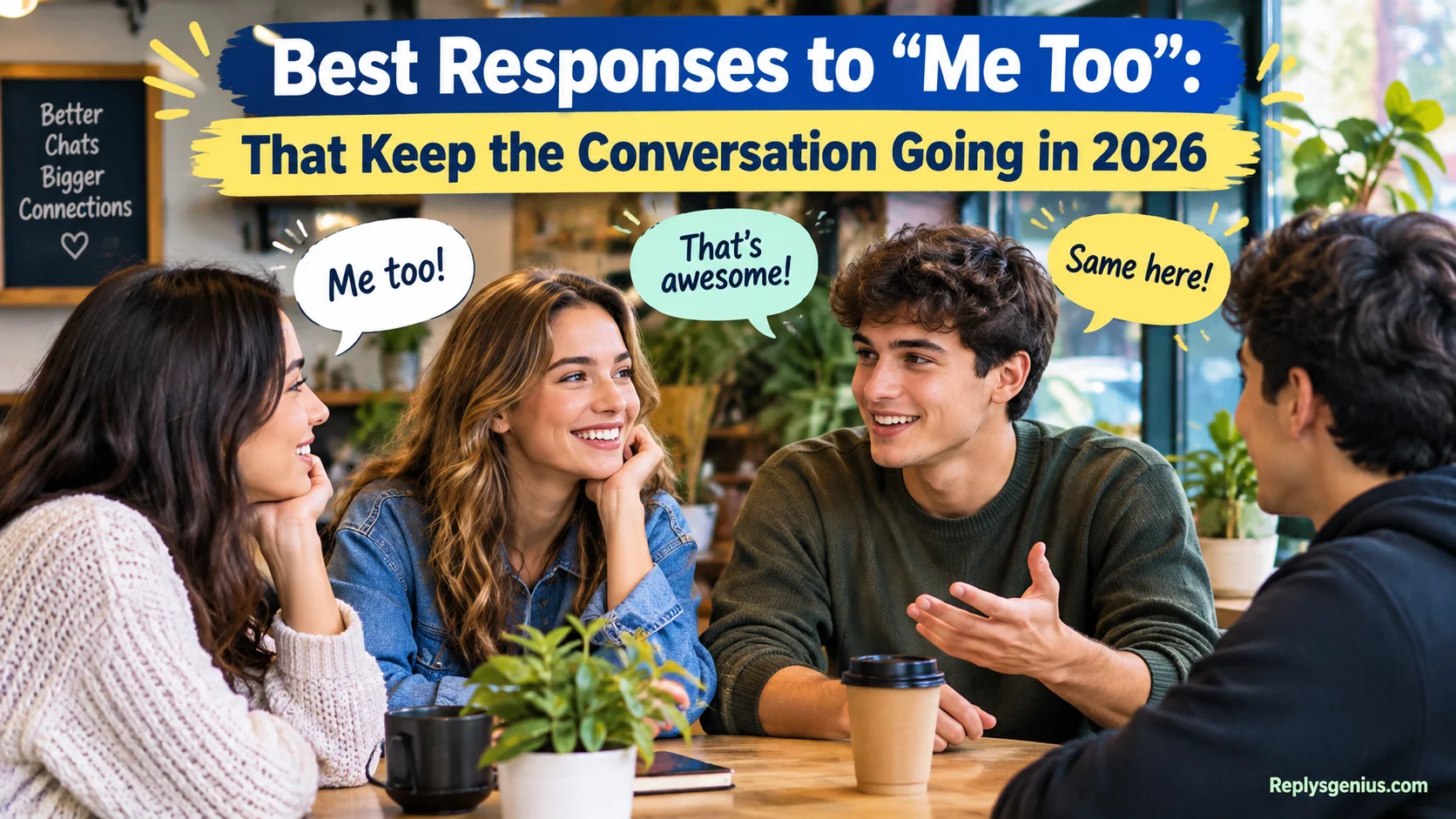
Best Responses to “Me Too”: That Keep the Conversation Going in 2026 can feel much more natural when your reply matches the relationship and interest level involved. In my experience, a natural reply usually works better than an overplanned one. If your crush or partner says something exciting, a romantic text, playful response, or flirty message can make them smile or blush. With a best friend, family member, friend, or coworker, a casual, fun, warm, or professional answer may fit better. This choice shows social awareness, emotional intelligence, and confidence.
A thoughtful response can shape the next interaction and keep the conversation balanced and conversation natural. A simple message such as looking forward to meeting you can show genuine excitement without sounding forced. You can also create a meaningful moment with a heartfelt message that makes the other person feel appreciated. A funny answer can add energy, while the way you respond should match the moment and protect the connection you are building.
If you want best replies for every situation, a helpful guide can give you natural ideas for better communication. A sweet response works when you want to sound caring, while a romantic or flirty message can suit clear attraction. When someone says “talk to you later,” you can keep the door open for the next interaction instead of ending things abruptly. These small choices help keep the conversation flowing and maintain excitement without making the exchange feel forced.
1. “Really? What a Coincidence!”
Sometimes “Me too” reveals that you and the other person have something surprisingly similar. Instead of simply moving on, you can turn that shared interest into a conversation. “Really? What a coincidence!” sounds enthusiastic without being overly personal. It gives the other person an easy opportunity to explain what you have in common.
When to use
Use it when you discover a shared interest, habit, preference, or experience.
When not to use
Avoid it when the other person is sharing something serious or emotional.
Example
You: “I love watching old mystery movies.”
Them: “Me too.”
You: “Really? What a coincidence! What’s your favorite?”
2. “Same Here! What Do You Like About It?”
A simple “same here” confirms that you relate, but adding a question keeps the exchange alive. This response works particularly well when you’re discussing movies, music, food, hobbies, games, or personal interests. It shows that you’re not just waiting for your turn to speak—you’re genuinely interested in their answer.
When to use
Use it for casual conversations about shared preferences and interests.
When not to use
Don’t force a question if the conversation is already naturally ending.
Example
You: “I’m really into photography.”
Them: “Me too!”
You: “Same here! What do you like photographing most?”
3. “We Have That in Common!”
Finding common ground can make a conversation feel more comfortable almost instantly. “We have that in common!” is warm, positive, and easy to understand. It works especially well when you’re still getting to know someone and want to highlight a shared preference without making the interaction unnecessarily complicated.
When to use
Use it when you discover a genuine similarity with someone.
When not to use
Avoid repeating it for every small similarity because it can start sounding mechanical.
Example
Them: “I’m obsessed with coffee.”
You: “We have that in common! What’s your usual order?”
4. “Okay, We’re Basically Twins!”
If the conversation has a playful tone, “Okay, we’re basically twins!” adds humor to a simple agreement. It exaggerates the similarity in a lighthearted way, making the response more memorable. This works particularly well with friends or someone who already feels comfortable joking around with you.
When to use
Use it with friends, close classmates, or playful online conversations.
When not to use
Don’t use it in formal workplace conversations or serious discussions.
Example
You: “I could eat pizza every day.”
Them: “Me too.”
You: “Okay, we’re basically twins!”
5. “Great Minds Think Alike!”
“Great minds think alike!” is a classic response that turns agreement into a compliment. It works when you and another person have made the same choice or expressed the same opinion. Because the phrase is familiar, it feels effortless in casual texting and can add a little confidence and humor to the conversation.
When to use
Use it after discovering that you share the same taste, opinion, or decision.
When not to use
Avoid using it when someone is discussing grief, illness, conflict, or another sensitive subject.
Example
Them: “That’s my favorite song too.”
You: “Great minds think alike!”
6. “No Way! Tell Me More.”
Sometimes “Me too” gives you a perfect opportunity to discover a new detail about someone. “No way! Tell me more.” communicates genuine curiosity and encourages them to continue. It’s especially useful when the shared experience could lead to a longer discussion rather than just a quick acknowledgment.
When to use
Use it when the other person’s statement suggests an interesting story or experience.
When not to use
Don’t say it if you aren’t actually interested in hearing more.
Example
Them: “I’ve been to Japan too.”
You: “No way! Tell me more. What was your favorite place?”
7. “What’s Your Favorite?”
A question about someone’s favorite thing is one of the easiest ways to extend a conversation. After hearing “Me too,” asking “What’s your favorite?” shifts the exchange from agreement to discovery. You can adapt the question to movies, songs, restaurants, books, games, sports, hobbies, or almost any shared interest.
When to use
Use it when you’re discussing something with multiple options or favorites.
When not to use
Skip it when the original topic doesn’t naturally have favorites.
Example
You: “I love superhero movies.”
Them: “Me too.”
You: “Nice! What’s your favorite?”
8. “Then We Need to Talk About This!”
This response adds energy and playful excitement to the conversation. “Then we need to talk about this!” suggests that the shared interest is important enough to explore. It can make an ordinary agreement feel like the beginning of a more engaging discussion, particularly among friends or people discovering similar interests.
When to use
Use it for strong shared interests, such as favorite shows, music, games, or hobbies.
When not to use
Avoid making it sound dramatic when the topic is sensitive or serious.
Example
Them: “I love that TV show too.”
You: “Then we need to talk about this! Which season is your favorite?”
9. “You Have Good Taste!”
A playful compliment can make a simple “Me too” exchange more memorable. “You have good taste!” works particularly well when the shared preference involves music, movies, food, fashion, books, or entertainment. It gives the other person a positive social cue while naturally leaving room for another question.
When to use
Use it when the shared preference involves taste or personal choices.
When not to use
Avoid it when the topic is something serious rather than a preference.
Example
Them: “I love that band too.”
You: “You have good taste! Which song do you play the most?”
10. “Looks Like We’d Get Along!”
When you discover several similarities with someone, you can turn them into a friendly observation. “Looks like we’d get along!” creates a warm tone without making the statement too intense. It can work well when meeting a new friend, chatting online, or getting to know someone through a shared community.
When to use
Use it when you’ve discovered multiple compatible interests.
When not to use
Avoid it if you’ve barely exchanged any messages and the statement could feel premature.
Example
Them: “I love hiking and coffee too.”
You: “Looks like we’d get along!”
11. “Now I’m Curious About You.”
This response shifts attention toward the other person in a natural way. “Now I’m curious about you” can make the conversation feel more personal without immediately becoming overly serious. It’s particularly useful when you’re getting to know someone and want to encourage them to share more about their personality, interests, or experiences.
When to use
Use it during getting-to-know-you conversations.
When not to use
Don’t use it if the other person appears uncomfortable with personal questions.
Example
Them: “I love traveling alone too.”
You: “Now I’m curious about you. Where have you traveled?”
12. “We Should Do That Together Sometime.”
When two people discover the same activity or interest, suggesting it as a future activity can naturally move the conversation forward. “We should do that together sometime” can sound friendly or slightly flirty depending on the relationship and tone. Keep the suggestion relaxed rather than making it feel like pressure.
When to use
Use it when you genuinely share an activity you could reasonably do together.
When not to use
Avoid it if you barely know the person or the suggestion could feel uncomfortable.
Example
Them: “I love trying new restaurants.”
You: “Same! We should do that together sometime.”
Read More: 25 Funny Responses to “Exactly”: You’ll Actually Want to Use in 2026 (With Examples)
13. “Wait, You Like That Too?”
A little surprise can make a conversation feel spontaneous. “Wait, you like that too?” expresses genuine excitement while inviting the other person to elaborate. It works especially well when the shared interest is unexpected or when you didn’t expect to find common ground so quickly.
When to use
Use it when the similarity is surprising or unusual.
When not to use
Don’t overuse exaggerated surprise for ordinary similarities.
Example
Them: “I’m into astronomy too.”
You: “Wait, you like that too? How did you get into it?”
14. “Okay, Now We’re Talking!”
This playful reply adds enthusiasm without requiring a complicated follow-up. “Okay, now we’re talking!” can turn a simple agreement into a fun moment. It works particularly well in group chats, friendly texting, gaming conversations, and discussions about entertainment, food, or shared hobbies.
When to use
Use it when you want a fun and energetic response.
When not to use
Avoid it when the subject requires empathy or seriousness.
Example
Them: “I love late-night gaming too.”
You: “Okay, now we’re talking! What do you play?”
15. “Same! How Did You Get Into It?”
Agreement becomes much more interesting when you ask about the story behind someone’s interest. “How did you get into it?” encourages the other person to explain their background instead of giving another one-word answer. This can turn a short text exchange into a meaningful conversation.
When to use
Use it for hobbies, careers, interests, fandoms, and skills.
When not to use
Don’t ask for a backstory when the topic is trivial or time-sensitive.
Example
Them: “I’m into painting too.”
You: “Same! How did you get into it?”
16. “That Makes Two of Us!”
“That makes two of us!” is a friendly way to emphasize shared feelings or experiences. It can work with everything from being tired to loving a particular snack. Because it doesn’t automatically demand another question, it’s useful when you want to keep the tone conversational without putting pressure on the other person to continue.
When to use
Use it for shared feelings, habits, preferences, or experiences.
When not to use
Avoid it when someone reveals something that needs a more thoughtful response.
Example
Them: “I’m exhausted today.”
You: “That makes two of us!”
17. “We’re on the Same Page!”
This response is especially useful when “Me too” follows an opinion, preference, or shared perspective. “We’re on the same page!” communicates agreement while keeping the conversation positive. It can work in casual conversations and, with a more professional tone, even in workplace discussions.
When to use
Use it when you share the same viewpoint, preference, or approach.
When not to use
Don’t use it to dismiss legitimate differences in a serious discussion.
Example
Them: “I think we should keep the plan simple.”
You: “We’re on the same page!”
18. “You’re Making Me Like You More!”
For a playful or lightly flirty conversation, this response can add warmth and personality. “You’re making me like you more!” works because it transforms a shared preference into a small compliment. However, the relationship matters. It should sound playful rather than overly intense, especially when you’re still getting acquainted.
When to use
Use it in a friendly, playful, or mutually flirtatious conversation.
When not to use
Avoid it in professional conversations or when romantic interest hasn’t been established.
Example
Them: “I love that artist too.”
You: “You’re making me like you more!”
19. “I Knew There Was a Reason I Liked You!”
This is another playful response that turns common ground into a humorous compliment. “I knew there was a reason I liked you!” can work particularly well between friends or people who already have a comfortable relationship. The exaggerated wording makes it feel teasing rather than formal.
When to use
Use it when there’s already friendly chemistry or familiarity.
When not to use
Avoid it with strangers if it could be interpreted as romantic interest.
Example
Them: “I love horror movies too.”
You: “I knew there was a reason I liked you!”
20. “Okay, We Need to Be Friends!”
Sometimes discovering several shared interests creates an easy opportunity for humor. “Okay, we need to be friends!” makes that connection explicit in a playful way. It’s especially natural in social media comments, new group chats, gaming communities, and casual conversations where people are bonding over common interests.
When to use
Use it when you discover several fun similarities.
When not to use
Avoid it if the conversation is formal or the relationship requires more distance.
Example
Them: “I love that game too.”
You: “Okay, we need to be friends!”
21. “Same! What Else Do We Have in Common?”
If you want to turn a single similarity into a longer conversation, ask what else you might share. “What else do we have in common?” creates a playful mini-game and gives both people something to explore. It works particularly well when you’re meeting someone new or enjoying a relaxed conversation.
When to use
Use it during icebreakers, new friendships, or getting-to-know-you chats.
When not to use
Don’t push it if the other person is giving short or uninterested responses.
Example
Them: “I love cats too.”
You: “Same! What else do we have in common?”
22. “Tell Me One Thing I Don’t Know About You.”
A conversation can become more meaningful when you move beyond obvious similarities. This response invites the other person to share something unique about themselves. “Tell me one thing I don’t know about you” works best when there’s already enough comfort for a slightly more personal question.
When to use
Use it when you’re getting to know someone better.
When not to use
Avoid it with someone who prefers very casual or surface-level conversation.
Example
Them: “I love cooking too.”
You: “Same! Tell me one thing I don’t know about you.”
23. “What’s Your Story?”
A shared experience can sometimes lead to a deeper conversation. “What’s your story?” is intentionally open-ended, allowing the other person to decide what they want to share. It’s more personal than a basic follow-up question, so it works best when the conversation already has some trust or emotional openness.
When to use
Use it when the person has mentioned a meaningful experience, hobby, or personal interest.
When not to use
Don’t use such an open-ended question if the conversation is purely casual and brief.
Example
Them: “I started playing guitar too.”
You: “Nice! What’s your story? How did you start?”
24. “Haha, We’re Too Similar!”
When the conversation has several small coincidences, humor can keep things relaxed. “Haha, we’re too similar!” acknowledges the pattern without taking it too seriously. It’s a natural response for friends, classmates, online friends, or anyone with whom you’re already comfortable joking.
When to use
Use it after several shared preferences or experiences.
When not to use
Don’t use it when the similarity involves something sensitive or serious.
Example
Them: “I stay up way too late too.”
You: “Haha, we’re too similar!”
25. “So, What Are We Talking About Next?”
Sometimes the best way to keep a conversation going is to openly invite the next topic. “So, what are we talking about next?” removes the pressure of thinking up a clever response and gives the other person control over where the conversation goes. It works especially well when you want to keep chatting.
When to use
Use it when you genuinely want to continue the conversation.
When not to use
Avoid it if the other person seems ready to end the conversation.
Example
Them: “I love that movie too.”
You: “Nice! So, what are we talking about next?”
How to Choose the Right Response to “Me Too”
The best response depends on the context, relationship, and tone. A simple “Same here!” is enough for a casual exchange, while “What’s your favorite?” creates an opening for more discussion. If you’re talking with a close friend, playful replies such as “We’re basically twins!” can feel natural. With a crush, a lightly flirty response may work if the conversation already has that tone.
A useful rule is to match the other person’s energy. If they give a short reply, don’t overwhelm them with a long message. If they’re enthusiastic and asking questions, you can give them more to work with. Good conversation isn’t about finding one perfect sentence; it’s about giving the other person a comfortable reason to respond.
FAQs
What is a good response to “Me Too”?
A good response depends on the situation and your relationship with the person. You can keep it simple, warm, funny, or flirty depending on the tone of the conversation.
How can I keep the conversation going after “Me Too”?
Ask a natural question, add a personal comment, or share a little excitement. This helps keep the conversation flowing instead of letting the chat end.
What is a flirty response to “Me Too”?
Try something playful such as, “Then I guess we’re both on the same page.” A flirty response works best when there is already clear attraction or mutual interest.
Can I use “Me Too” responses with a crush?
Absolutely. With a crush, a playful response, romantic message, or light teasing can create a stronger connection without making the conversation feel forced.
Should my response be funny or romantic?
Choose the tone that matches the moment. A funny reply is great for casual conversations, while a romantic or sweet response is better when you want to show genuine feelings.
Conclusion
The best Best Responses to “Me Too”: That Keep the Conversation Going in 2026 are not always the longest or cleverest ones. A natural, simple, and thoughtful reply can show confidence, emotional intelligence, and genuine interest. Whether you are talking to a crush, partner, friend, or coworker, choosing the right tone makes your message feel more personal.
Remember that good communication is about making the other person feel heard and comfortable. Use funny, flirty, romantic, casual, or sweet responses based on the situation, and do not overthink every word. The right response should feel like something you would naturally say while helping the conversation flow.