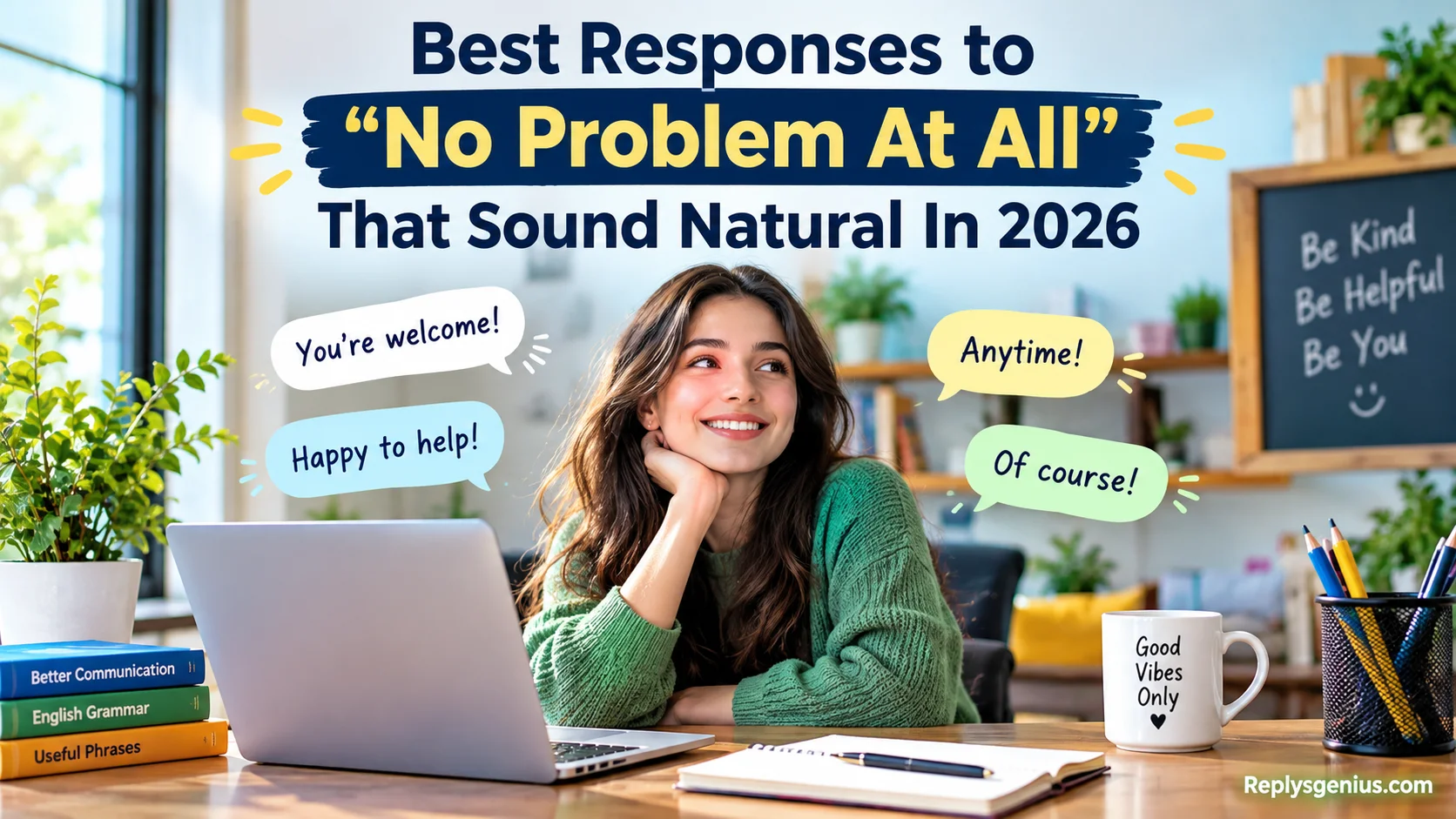
Best Responses to “No Problem At All”: That Sound Natural In 2026 help you choose warm, funny, flirty, and professional replies for every chat.
When someone says no problem at all, your reply can set a positive tone and make conversations feel more natural. The best responses to no problem at all depend on the situation, whether you need a casual response, friendly response, or polite response at work, at home, or in everyday chats. Choose funny responses, playful replies, and witty replies for friends, or try a flirty response when talking to a crush.
In professional communication, use respectful wording and a professional tone to keep work messages clear and comfortable. Good communication skills, confidence, and emotional intelligence help you avoid awkward replies and maintain a friendly connection. With the right words, you can show kindness, express gratitude, and keep every conversation warm, meaningful, and easy.
1. Thank You So Much
“Thank you so much” is one of the most natural responses to “No problem at all.” It shows that you genuinely appreciate the other person’s help without making the conversation unnecessarily formal. Use it when someone has completed a task, answered your questions, or done you a favor. A simple expression of gratitude can make the other person feel valued and respected.
When to use
Use this response when someone helps you with something important or takes time out of their day to assist you.
When not to use
Avoid repeating it several times after the other person has already acknowledged your thanks. One sincere response is usually enough.
Example
Person A: Sorry for asking you to check my assignment again.
Person B: No problem at all!
You: Thank you so much. I really appreciate your help.
2. I Really Appreciate It
“I really appreciate it” sounds sincere, thoughtful, and slightly more personal than a simple thank-you. It works well when someone has helped you solve a problem, shared useful information, or made your day easier. This response acknowledges their effort and shows that you do not take their kindness for granted. It is suitable for both friendly conversations and many professional situations.
When to use
Use it when someone’s help has made a meaningful difference or saved you time and effort.
When not to use
Avoid using it sarcastically or in a situation where the other person has not actually helped you.
Example
Coworker: No problem at all! I can send you the updated document.
You: I really appreciate it. That will save me a lot of time.
3. You’re a Lifesaver!
“You’re a lifesaver!” is a friendly, enthusiastic way to respond when someone has helped you out of a difficult situation. It adds personality to your gratitude and makes the exchange feel less formal. For example, if a friend lends you a charger when your phone battery is almost dead, this response communicates relief and appreciation in a natural, memorable way.
When to use
Use it with friends, classmates, coworkers you know well, or anyone who has helped you at just the right moment.
When not to use
Avoid it in highly formal business correspondence or when the situation calls for a serious, restrained response.
Example
Friend: No problem at all! You can borrow my charger.
You: You’re a lifesaver! My phone was about to die.
4. Thanks, I Owe You One
“Thanks, I owe you one” combines gratitude with a friendly promise to return the favor someday. It sounds relaxed and natural, especially when someone helps you with an everyday task. You might say it after a friend covers your shift, lends you a book, or gives you a ride. The phrase suggests that you value the relationship and would gladly help them in return.
When to use
Use it when a friend or colleague does you a favor that you could reasonably return later.
When not to use
Avoid it when you cannot genuinely offer help in return or when the other person’s assistance involves a serious, sensitive matter.
Example
Friend: No problem at all! I’ll pick up your package on my way home.
You: Thanks, I owe you one. Let me get you coffee next time!
5. That’s Really Kind of You
“That’s really kind of you” recognizes the person’s kindness rather than focusing only on the favor itself. It sounds warm, considerate, and sincere. This response is particularly useful when someone offers assistance without being asked or makes an extra effort to help you. It also works when you want to express appreciation without sounding overly casual or repeating the same words every time.
When to use
Use it when someone goes out of their way to support you or offers help unexpectedly.
When not to use
Avoid an exaggerated delivery when the conversation is very casual or the favor is extremely minor.
Example
Neighbor: No problem at all! I’ll bring your groceries inside.
You: That’s really kind of you. Thank you for helping me.
6. I Knew I Could Count on You
“I knew I could count on you” expresses appreciation while highlighting the trust you have in the other person. It works especially well with close friends, family members, and reliable coworkers. Instead of simply thanking them, you recognize that they are someone you can depend on. Used sincerely, this response can strengthen a relationship and make the other person feel appreciated for being dependable.
When to use
Use it with someone you trust who has helped you during a busy or stressful moment.
When not to use
Avoid it with new acquaintances or people you barely know because it can sound overly familiar.
Example
Friend: No problem at all! I’ll help you prepare for the interview.
You: I knew I could count on you. You’re the best!
7. You’re So Sweet
“You’re so sweet” is a warm, affectionate response that works well with friends, partners, family members, and people who have shown genuine kindness. It adds an emotional touch to your gratitude and makes the conversation feel personal. Depending on your relationship, it can sound friendly, caring, or even slightly flirty. The key is to match your tone to the connection you share with the other person.
When to use
Use it when someone does something thoughtful and you want to make them feel appreciated.
When not to use
Avoid it in formal workplace conversations or with someone who might misunderstand your intentions.
Example
Partner: No problem at all! I saved you the last slice of cake.
You: You’re so sweet. You know exactly how to make me happy!
8. I Appreciate You!
“I appreciate you” goes beyond thanking someone for a particular favor. It acknowledges the person and the kindness they bring to your life. This phrase sounds natural in close friendships, family conversations, and supportive relationships. It can be especially meaningful when someone regularly helps you or listens when you need advice. A sincere delivery makes the response feel personal instead of sounding like an automatic expression of thanks.
When to use
Use it when you want to recognize someone’s ongoing support or thoughtful behavior.
When not to use
Avoid it when a brief, professional acknowledgment would be more appropriate or when the relationship is still very formal.
Example
Friend: No problem at all! You can always call me if you need advice.
You: I appreciate you! It means a lot to have you in my corner.
9. Thanks for Being So Helpful
“Thanks for being so helpful” is a clear and professional way to express appreciation. It recognizes the other person’s willingness to assist you and works particularly well in emails, meetings, customer service conversations, and workplace chats. Instead of using a vague thank-you, you identify exactly what you value: their helpful attitude. This makes your response sound thoughtful, respectful, and suitable for professional relationships.
When to use
Use it when a colleague, manager, customer service representative, or classmate has provided useful assistance.
When not to use
Avoid it when a playful or affectionate response would better suit a close personal relationship.
Example
Colleague: No problem at all! I’ve attached the files you requested.
You: Thanks for being so helpful. I’ll review everything this afternoon.
10. You’re the Best!
“You’re the best!” is an upbeat response that makes gratitude sound energetic and friendly. It is ideal when someone does you a favor and you want to show your excitement without writing a long message. You can use it in texts, group chats, or everyday conversations with people you know well. Its casual tone makes it especially useful when a simple thank-you feels a little too ordinary.
When to use
Use it with friends, siblings, partners, and friendly coworkers who appreciate an enthusiastic response.
When not to use
Avoid it in formal letters or serious situations where a more measured expression of gratitude is needed.
Example
Friend: No problem at all! I got the concert tickets.
You: You’re the best! I can’t wait to go!
11. That Means a Lot to Me
“That means a lot to me” communicates heartfelt appreciation. It is especially effective when someone offers emotional support, makes time for you, or helps you during a challenging period. Rather than focusing on the practical favor, the phrase explains how much their action matters to you. It creates a meaningful connection and helps the other person understand that their kindness has had a positive impact.
When to use
Use it when someone’s support is personally meaningful or arrives at an important moment.
When not to use
Avoid it for routine, insignificant exchanges where a quick thank-you would sound more natural.
Example
Friend: No problem at all. I’m happy to listen whenever you need to talk.
You: That means a lot to me. Thank you for being there.
12. Thanks Again!
“Thanks again!” is a short, polite response that works when you have already expressed gratitude and want to close the conversation naturally. It is useful in emails, text messages, and face-to-face conversations. The word “again” reminds the other person that you recognize their effort without requiring another lengthy exchange. This makes it a convenient choice when you want to acknowledge their kindness and move on.
When to use
Use it when wrapping up a conversation after receiving help or discussing a completed favor.
When not to use
Avoid repeating it several times in the same message, as it can make your response feel repetitive.
Example
Colleague: No problem at all! Let me know if you need anything else.
You: Thanks again! I’ll reach out if I have any questions.
Read More: 25 Funny Responses to “You’re Welcome”: For Quick Thinkers In 2026 (With Examples)
13. I Owe You Big Time
“I owe you big time” is a casual, expressive way to show that you are especially grateful for someone’s help. It suggests that their favor was significant enough to deserve a favor in return. The phrase is common among friends and close colleagues who enjoy relaxed conversations. It can also add a little humor when someone has helped you avoid an inconvenient or stressful situation.
When to use
Use it when someone makes a substantial effort to help you, especially at short notice.
When not to use
Avoid it in formal business communication or when the person has helped with something that should not be treated as a debt.
Example
Friend: No problem at all! I’ll cover your shift on Friday.
You: I owe you big time. Dinner is on me next week!
14. You Didn’t Have to Do That
“You didn’t have to do that” expresses surprise and gratitude when someone does something especially thoughtful. Although it can sound like a complaint if delivered incorrectly, a warm tone makes it clear that you appreciate the gesture. It works well when someone brings you a gift, offers extra assistance, or takes care of a task without expecting anything in return.
When to use
Use it when someone goes beyond what you expected and you want to acknowledge their generosity.
When not to use
Avoid saying it sharply or repeatedly, as the other person might think you are unhappy with their gesture.
Example
Friend: No problem at all! I brought you your favorite snacks.
You: You didn’t have to do that, but thank you! That’s so thoughtful.
15. That’s So Thoughtful of You
“That’s so thoughtful of you” is a gentle, appreciative response that recognizes the care behind someone’s actions. It is especially useful when a person remembers something important to you, anticipates your needs, or offers assistance in a considerate way. This phrase sounds more personal than a standard thank-you while remaining appropriate for many different relationships. It lets the other person know that you noticed the thought they put into helping you.
When to use
Use it when someone remembers your preferences, makes a considerate gesture, or helps you without being asked.
When not to use
Avoid it when the conversation is strictly transactional and a brief acknowledgment would fit better.
Example
Coworker: No problem at all! I printed an extra copy of the presentation for you.
You: That’s so thoughtful of you. Thanks for thinking ahead!
16. I Can’t Thank You Enough
“I can’t thank you enough” communicates strong appreciation when a simple thank-you does not seem sufficient. It is appropriate when someone has made a significant effort, offered important support, or helped you through a difficult situation. The phrase is sincere and expressive without requiring you to explain every detail of your gratitude. Use it when you want the other person to understand how much their assistance truly matters.
When to use
Use it when someone has done something particularly meaningful or has spent considerable time helping you.
When not to use
Avoid it for tiny everyday favors if you want your conversation to sound relaxed and proportionate.
Example
Friend: No problem at all! I helped organize everything for your graduation party.
You: I can’t thank you enough. You made the day so special!
17. Glad You Didn’t Mind
“Glad you didn’t mind” is a natural response when you were worried that your request might inconvenience someone. It communicates relief and appreciation while keeping the exchange casual. This phrase is particularly useful after asking a favor, requesting a small change, or needing someone’s help at an inconvenient time. It acknowledges their flexibility and helps the conversation move forward without dwelling on the inconvenience.
When to use
Use it when someone reassures you that your request or interruption was not a problem.
When not to use
Avoid it when the situation requires a more direct apology because your actions genuinely caused inconvenience.
Example
You: Sorry for asking you to stay a few extra minutes.
Colleague: No problem at all!
You: Glad you didn’t mind. I really appreciate the extra help.
18. You’re Always So Helpful
“You’re always so helpful” recognizes a person’s consistent willingness to assist. It works well with friends, supportive colleagues, classmates, and family members who regularly make things easier for you. Unlike a one-time thank-you, this response highlights a positive quality you have noticed over time. It can make the other person feel valued because you are acknowledging their broader contribution, not just the favor they completed today.
When to use
Use it when someone has helped you on several occasions or has a reputation for being dependable.
When not to use
Avoid it if you barely know the person or have no reason to suggest that their helpfulness is a regular habit.
Example
Classmate: No problem at all! I can share my notes with you.
You: You’re always so helpful. Thanks for making studying easier!
19. I Knew You’d Help Me Out
“I knew you’d help me out” sounds friendly and confident when talking to someone you know well. It expresses gratitude while showing that you trust the person’s willingness to support you. The phrase works particularly well between close friends, siblings, or teammates who regularly help one another. However, it should sound appreciative rather than demanding, so the other person does not feel that their assistance was expected or taken for granted.
When to use
Use it with someone who has a close relationship with you and has willingly offered assistance.
When not to use
Avoid it with new acquaintances or in situations where the person might feel pressured to help.
Example
Friend: No problem at all! I’ll help you move those boxes tomorrow.
You: I knew you’d help me out. I’ll bring coffee for both of us!
20. You Made My Day!
“You made my day!” is an enthusiastic way to show that someone’s kindness has improved your mood. It works when a person offers unexpected help, shares good news, or does something that makes your day easier. The phrase feels personal and positive, making it useful for messages and face-to-face conversations alike. It can turn an ordinary exchange into a pleasant moment and encourage the other person to keep spreading kindness.
When to use
Use it when someone’s gesture genuinely makes you happy or removes a source of stress.
When not to use
Avoid it when the favor is routine and the expression would sound exaggerated or insincere.
Example
Friend: No problem at all! I picked up your favorite coffee on my way over.
You: You made my day! I really needed this coffee.
21. I Appreciate Your Time
“I appreciate your time” is a polished response that works especially well in professional conversations. It acknowledges that the other person has given you attention, answered your questions, or helped you complete a task. This phrase is useful in emails, interviews, meetings, and workplace messages because it sounds respectful without being overly formal. It also shows that you understand people’s time is valuable and do not take their assistance for granted.
When to use
Use it when someone has spent time explaining something, reviewing your work, or helping you with a professional task.
When not to use
Avoid it in casual chats with close friends, where it might sound unnecessarily businesslike.
Example
Manager: No problem at all! I’m happy to walk you through the new process.
You: I appreciate your time. The explanation makes everything much clearer.
22. Thanks for Making It Easy
“Thanks for making it easy” is a practical response when someone helps a task go smoothly. It recognizes not only their willingness to help but also the way they simplified the process. You can use it when a coworker explains a complicated assignment, a friend organizes plans, or someone resolves a problem efficiently. This phrase feels natural because it connects your appreciation to a specific positive result.
When to use
Use it when someone’s assistance saves you effort, clears up confusion, or makes a difficult task more manageable.
When not to use
Avoid it if the person’s help actually made the situation more complicated or if the phrase could sound sarcastic.
Example
Coworker: No problem at all! I’ve arranged the meeting and sent everyone the details.
You: Thanks for making it easy. That saves me a lot of back-and-forth.
23. You’re Too Kind!
“You’re too kind!” is a friendly expression of gratitude that can sound playful, affectionate, or politely appreciative depending on your tone. It is useful when someone offers a favor, gives you a compliment, or does something unexpectedly generous. The phrase adds warmth to a conversation and helps you acknowledge the person’s kindness without needing a long explanation. In informal chats, it can also make your reply feel charming and lighthearted.
When to use
Use it when someone offers a thoughtful favor or does something generous that deserves acknowledgment.
When not to use
Avoid it in formal situations where a straightforward expression of thanks would sound clearer and more professional.
Example
Friend: No problem at all! I saved you a seat near the front.
You: You’re too kind! I was hoping to sit somewhere with a good view.
24. Don’t Mention It!
“Don’t mention it!” is a casual response that communicates appreciation while reassuring the other person that their favor was no trouble. It is often used to close a thank-you exchange in a relaxed, friendly way. Although it can also be used as a response to someone saying thank you, it works after “No problem at all” when you want to emphasize that the interaction was easy and there is no need to make a big deal of it.
When to use
Use it with friends, family members, or colleagues when you want to keep the exchange light and comfortable.
When not to use
Avoid it when someone is expressing deep gratitude for a major act of kindness and a more heartfelt reply would be appropriate.
Example
Friend: No problem at all! I was happy to help you study.
You: Thanks again!
Friend: Don’t mention it! We’ll get through the next exam together.
25. I’m Here Whenever You Need Me
“I’m here whenever you need me” is a supportive response that reinforces trust and connection. It works especially well when someone has helped you during a difficult time or regularly offers emotional support. Rather than focusing on a single favor, this phrase communicates that you value the relationship and are willing to support the other person too. Use it sincerely, particularly with close friends, family members, or partners who appreciate reassurance.
When to use
Use it when you share a close relationship and genuinely want the other person to know they can rely on you.
When not to use
Avoid making this promise casually if you cannot realistically offer ongoing support. A sincere, manageable commitment is better than an exaggerated one.
Example
Friend: No problem at all! You know I’m happy to listen whenever you need to talk.
You: Thank you. I’m here whenever you need me, too.
FAQs
1. What does “No Problem at All” mean?
“No Problem at All” means that helping someone was easy and caused no trouble. People often use it to respond to thank-you messages and show kindness, friendliness, and a willingness to help.
2. What is the best response to “No Problem at All”?
A simple “Thanks, I appreciate it!” is a natural response. You can also say “That’s really kind of you” or “I’m glad it worked out!” to keep the conversation warm and friendly.
3. How do you respond to “No Problem at All” in a funny way?
Try a lighthearted reply such as “You deserve a medal for that!” or “I owe you a cookie!” These funny responses work well with friends when you want to add humor without making the conversation awkward.
4. How do you respond to “No Problem at All” professionally?
At work, you can say “I appreciate your help,” “Thank you for your support,” or “That’s very helpful of you.” These professional responses show respect and help maintain positive workplace relationships.
5. Can “No Problem at All” be a flirty response?
Yes, depending on the context and your relationship. A playful message such as “Anything for you 😉” can suggest subtle flirting. However, consider the other person’s comfort and communication style before using a flirty reply.
Conclusion
Finding the best responses to “No Problem At All” is about choosing words that fit the situation. A polite response works well in professional conversations, while funny replies can make friends laugh and flirty responses can add warmth when talking to a crush. Keep your wording natural, friendly, and easy to understand instead of overthinking every message.
Remember, good communication does not require perfect words. A little kindness, confidence, and humor can make everyday conversations more enjoyable. Whether you are texting a friend, chatting with a colleague, or talking to someone you like, choose a response that feels genuine and helps the conversation flow smoothly.