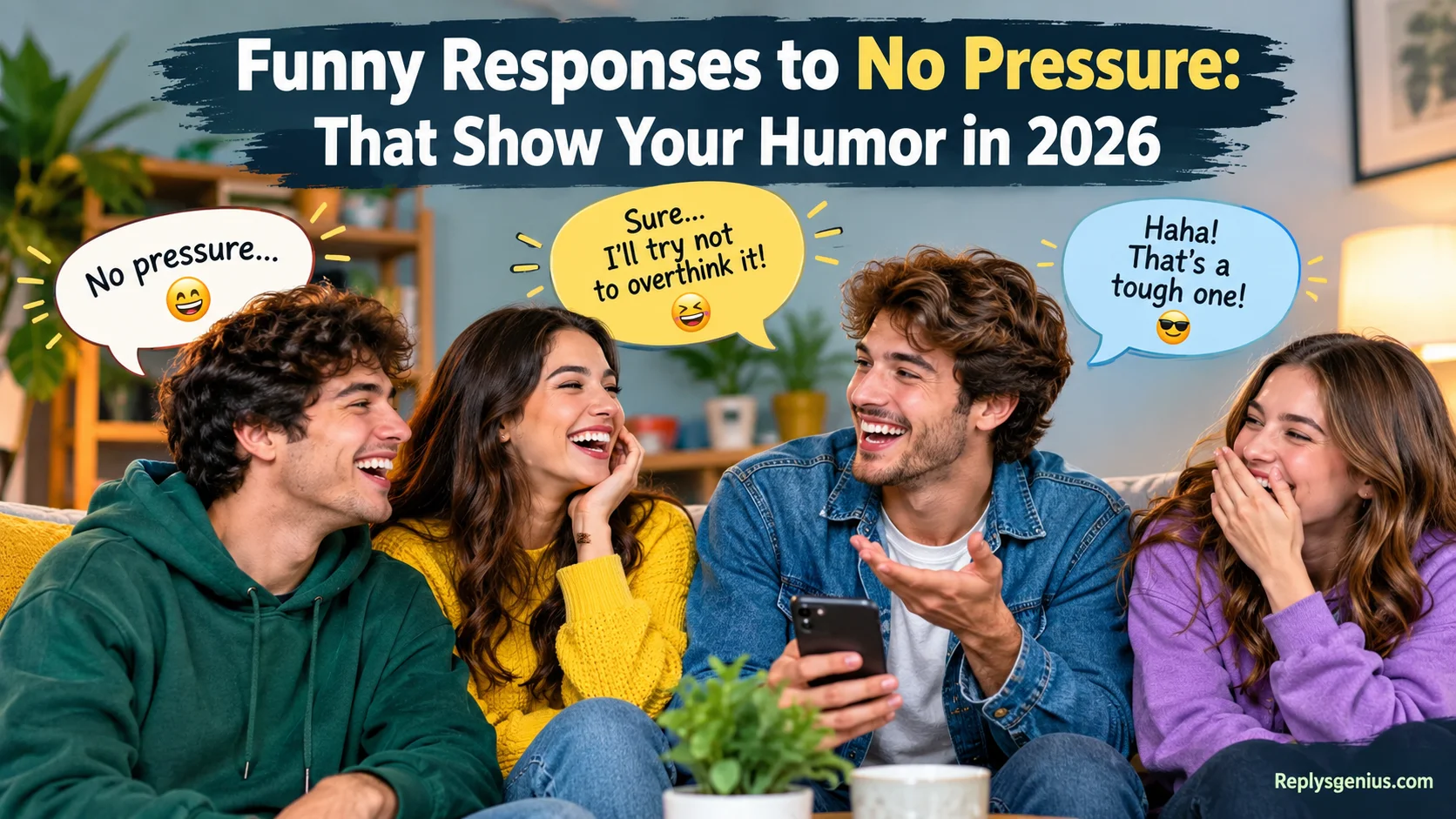
When someone says no pressure, it can create awkward pressure anyway. In my experience, a clever response works better than a long explanation because a funny joke can keep the mood light and make the conversation feel natural. Try “Zero pressure, just mild panic,” “Perfect, I’ll only overthink it,” “No pressure? Too late,” or “Cool, I’ll panic casually.” These are best funny replies when you want to use humor without trying too hard. A short, witty comeback can save the moment, especially when a friend asks for a favor, a crush wants an answer, or a coworker says whenever you can. Even in DMs, a suspiciously relaxed request can make your brain feel like it’s reached the season final.
The trick is matching the response to the relationship, context, and vibe. You can use sarcastic, flirty, classy, dramatic, playful, or completely unbothered replies, depending on the situation. A little random shade, playful roasting, or savage humor can change the vibe, while confidence, timing, and creativity keep the comeback from sounding forced. In 2026, witty comebacks, smart one-liners, original responses, trendy responses, and hilarious responses continue to fit social media, group chats, dating apps, everyday conversations, social platforms, TikTok comments, school hallways, office banter, and workplace chats. Gen Z and Millennials often enjoy humor with attitude, but a good funny response can work for almost anyone. You can test your patience, throw random shade, or deserve a smarter reply without turning the exchange into a serious negotiation.
The best comebacks don’t need to sound like something a comedian rehearsed. A clever line can instantly flip an argument, playful argument, challenge, or flirty moment and leave someone speechless. If people freeze up in the moment and think of the perfect reply three hours too late, having a small collection of text-ready options helps. You can choose “Thanks, I needed that pressure,” “Cool, I’ll panic casually,” or even “Make me” when the situation calls for maximum attitude. The goal is to make people laugh, make everyone laugh, or simply create a better reaction with the right phrase, invitation, or one-liners. That mix of quick wit, social currency, attitude, banter, laughter, and confidence makes a comeback feel original, trendy, hilarious, and genuinely yours.
1. “No Pressure? Now I’m Definitely Nervous.”
This playful response flips the meaning of “no pressure” by admitting that the phrase itself creates pressure. It works especially well when someone has given you a task, challenge, or decision and expects you to handle it easily. The humor comes from exaggerating a normal reaction without making the conversation uncomfortable.
When to use
Use it with friends, classmates, teammates, or familiar coworkers when the situation is lighthearted.
When not to use
Avoid it when someone is dealing with a serious deadline or genuinely stressful situation.
Example
Friend: “Just finish it whenever you can. No pressure.”
You: “No pressure? Now I’m definitely nervous.”
2. “Cool, I’ll Only Panic a Little.”
Sometimes the easiest way to create a funny reply is to exaggerate your reaction. “I’ll only panic a little” makes a simple situation sound dramatically important. It’s a short, conversational comeback that feels natural in texting and casual chats, especially when someone gives you a responsibility while pretending it’s completely relaxed.
When to use
Use this witty response when a friend gives you something challenging but isn’t actually demanding an immediate answer.
When not to use
Don’t use it if the other person is genuinely worried or discussing something sensitive.
Example
Friend: “Can you organize everything before tonight? No pressure.”
You: “Cool, I’ll only panic a little.”
3. “Thanks, That Took All the Pressure Away.”
This reply uses light sarcasm to say the exact opposite of what the phrase suggests. It’s funny because the speaker pretends that hearing “no pressure” has completely solved the problem. The response works particularly well when someone has just assigned you an important task and expects you to remain calm.
When to use
Use it with people who understand your sense of humor and sarcasm.
When not to use
Avoid it with someone who may interpret sarcasm as criticism.
Example
Boss: “We need this presentation tomorrow. No pressure.”
You: “Thanks, that took all the pressure away.”
4. “No Pressure, Just Mild Existential Dread.”
For a more dramatic and modern joke, this response takes a simple request and turns it into a tiny life crisis. Existential dread makes the comeback sound intentionally over-the-top. It’s particularly suitable for friends who enjoy dry humor, internet-style jokes, and exaggerated reactions during everyday conversations.
When to use
Use it in casual texting, group chats, or friendly conversations.
When not to use
Don’t use it when the topic involves genuine emotional distress or a serious personal problem.
Example
Friend: “Just make the decision today. No pressure.”
You: “No pressure, just mild existential dread.”
5. “I Can Feel the Pressure Leaving Already.”
This humorous reply pretends that saying “no pressure” has magically removed every stressful feeling. The joke is simple, making it easy to use without sounding forced. It’s a good option when you want a funny comeback that stays friendly rather than becoming overly sarcastic or dramatic.
When to use
Use it when the conversation is already playful and relaxed.
When not to use
Avoid it when someone expects a serious or professional response.
Example
Friend: “Pick the restaurant. No pressure.”
You: “I can feel the pressure leaving already.”
6. “Perfect. I’ll Just Be Judged Silently.”
This is a playful sarcastic response to “No pressure” that imagines an invisible audience judging your performance. It works because it takes an innocent phrase and gives it an exaggerated hidden meaning. The response is especially funny when someone has asked you to make a choice, perform a task, or deliver something important.
When to use
Use it with close friends or people who enjoy teasing humor.
When not to use
Avoid it around someone who might think you’re genuinely upset about being judged.
Example
Friend: “Choose the movie. No pressure.”
You: “Perfect. I’ll just be judged silently.”
7. “Say Less. I’m Already Overthinking It.”
Overthinking is something many people can relate to, which makes this response easy to understand. Instead of pretending to be completely calm, you jokingly admit that your brain has already started analyzing every possible outcome. It creates a relatable funny reply that can keep an ordinary conversation moving.
When to use
Use it when someone gives you a choice, decision, or small challenge.
When not to use
Don’t use it if the other person is asking for an important decision that requires a thoughtful answer.
Example
Friend: “You can decide where we go. No pressure.”
You: “Say less. I’m already overthinking it.”
8. “No Pressure? That’s a Suspicious Amount of Pressure.”
This comeback turns “no pressure” into a suspicious statement. The contradiction creates the joke. It’s short, clever, and flexible enough for conversations about plans, assignments, games, or decisions. The phrase also has a modern texting feel because it doesn’t require a long explanation to land the joke.
When to use
Use it for casual conversations and playful texting.
When not to use
Avoid it in formal emails or serious professional discussions.
Example
Friend: “You have to choose the team captain. No pressure.”
You: “No pressure? That’s a suspicious amount of pressure.”
9. “I’ll Try Not to Let the Pressure Know I’m Scared.”
Personifying pressure makes this response funny because it treats pressure like an actual person or opponent. It gives your reply a playful, imaginative quality without being offensive. This type of humorous comeback is useful when you want something slightly more creative than the usual “I’m nervous” response.
When to use
Use it with friends, gaming buddies, or people who enjoy silly humor.
When not to use
Avoid it when the conversation requires professionalism or seriousness.
Example
Teammate: “You’re taking the final shot. No pressure.”
You: “I’ll try not to let the pressure know I’m scared.”
10. “Great, I Was Worried There Would Be Pressure.”
This response uses dry humor by pretending you were concerned about pressure even though the person already said there wasn’t any. The deliberately obvious contradiction gives it a deadpan quality. It’s a good choice when your personality leans toward subtle jokes instead of dramatic sarcasm.
When to use
Use it in relaxed conversations where deadpan humor is understood.
When not to use
Avoid it if the listener may take your words literally.
Example
Coworker: “Just send it when you’re ready. No pressure.”
You: “Great, I was worried there would be pressure.”
11. “My Anxiety Would Like a Word With You.”
This playful reply gives your anxiety a fictional voice, turning a normal request into a humorous confrontation. It’s a relatable option for casual conversations where someone jokingly puts you on the spot. The phrase feels especially natural in text messages, group chats, and social media conversations.
When to use
Use it with friends who already understand your joking style.
When not to use
Avoid making mental-health-related jokes around someone who has expressed genuine distress.
Example
Friend: “Everyone is waiting for your answer. No pressure.”
You: “My anxiety would like a word with you.”
12. “Absolutely No Pressure. Just My Entire Reputation.”
This response dramatically increases the stakes for comic effect. Instead of treating the task as ordinary, you jokingly claim that your entire reputation depends on it. The exaggeration makes the reply memorable while keeping the tone playful. It’s ideal when the situation feels important but isn’t actually serious.
When to use
Use it before a presentation, game, competition, or social decision.
When not to use
Don’t use it when someone is genuinely worried about your reputation or performance.
Example
Friend: “You’re giving the speech today. No pressure.”
You: “Absolutely no pressure. Just my entire reputation.”
13. “Okay, I’ll Pretend This Is Easy.”
This response creates humor by openly admitting that the task probably isn’t as easy as the other person makes it sound. It’s a friendly way to acknowledge the challenge without complaining. The phrase works naturally in conversations where someone is encouraging you to do something difficult.
When to use
Use it for friendly challenges, schoolwork, games, or casual tasks.
When not to use
Avoid it when you need to communicate confidence in a formal setting.
Example
Friend: “Just fix this quickly. No pressure.”
You: “Okay, I’ll pretend this is easy.”
Read More: 25 Perfect Responses to “Are You Sure?”: You’ll Love Using in 2026 (With Examples)
14. “Pressure? I Thought We Were Just Hanging Out.”
This funny response deliberately misunderstands the situation. By acting as though the word “pressure” has appeared out of nowhere, you create a light conversational joke. It’s particularly useful when someone suddenly gives you a responsibility during what started as a relaxed interaction.
When to use
Use it with friends and casual acquaintances.
When not to use
Avoid it when the other person is giving you an important instruction.
Example
Friend: “You’re choosing the playlist. No pressure.”
You: “Pressure? I thought we were just hanging out.”
15. “Don’t Worry, I Perform Best Under Fake Pressure.”
This comeback turns the situation into a joke about performance. The word “fake” makes it clear that you aren’t taking the pressure seriously. It can also show confidence because you’re suggesting that you can handle the challenge even while joking about it.
When to use
Use it before games, presentations, competitions, or friendly challenges.
When not to use
Don’t use it if the situation involves genuine consequences.
Example
Teammate: “Everyone is counting on you. No pressure.”
You: “Don’t worry, I perform best under fake pressure.”
16. “I’m Calm. My Brain Just Filed for Overtime.”
This is a clever response for people who enjoy workplace humor and exaggerated texting jokes. Instead of saying you’re stressed, you imagine your brain working overtime. That makes the reply humorous without directly blaming the person who gave you the task.
When to use
Use it with coworkers, classmates, or friends in a relaxed environment.
When not to use
Avoid it if someone is discussing serious workplace stress.
Example
Coworker: “Can you handle this today? No pressure.”
You: “I’m calm. My brain just filed for overtime.”
17. “Thanks, I’ll Add That to My Collection of Stressful Moments.”
This response treats everyday challenges like collectibles. The unexpected comparison creates a funny image and gives your reply a playful personality. It works well when you’ve already dealt with several small challenges and someone casually adds another one to your list.
When to use
Use it when friends or coworkers are joking around.
When not to use
Avoid it if someone is sincerely trying to help you manage stress.
Example
Friend: “Can you also handle this? No pressure.”
You: “Thanks, I’ll add that to my collection of stressful moments.”
18. “Sure. I’ll Just Activate My Superhero Mode.”
This is a lighthearted comeback that responds to a challenge with exaggerated confidence. Pretending you can suddenly become a superhero makes the task sound intentionally ridiculous. It’s an upbeat alternative to sarcastic replies and can make the conversation feel more energetic.
When to use
Use it for fun challenges, gaming, sports, or friendly tasks.
When not to use
Avoid it when the person needs a realistic commitment or deadline.
Example
Friend: “Can you solve this before everyone arrives? No pressure.”
You: “Sure. I’ll just activate my superhero mode.”
19. “No Pressure, Just a Tiny Mountain to Climb.”
This response uses an exaggerated mountain metaphor to describe a difficult task. It’s humorous because the person says there’s no pressure while you compare the assignment to climbing a mountain. The phrase is still friendly and doesn’t sound overly sarcastic, making it useful in many casual situations.
When to use
Use it when someone gives you a challenging but manageable task.
When not to use
Avoid it if you want your response to sound completely serious.
Example
Friend: “Can you finish all of this tonight? No pressure.”
You: “No pressure, just a tiny mountain to climb.”
20. “I’ll Be Fine. Probably. Maybe. Hopefully.”
This response creates humor through a rapid sequence of uncertainty. Starting confidently and then immediately weakening that confidence makes the joke relatable. It’s perfect when you want to communicate that you’ll try your best while still acknowledging that the situation might be harder than expected.
When to use
Use it before exams, presentations, games, or difficult decisions.
When not to use
Avoid it when someone needs absolute certainty from you.
Example
Friend: “You’ve got this. No pressure.”
You: “I’ll be fine. Probably. Maybe. Hopefully.”
21. “Relax, I’ve Got This. My Confidence Is Just Buffering.”
This modern comeback combines internet language with everyday confidence. Saying your confidence is “buffering” makes you sound temporarily unprepared while keeping the tone funny. It’s especially suitable for people who enjoy digital humor, memes, gaming references, and casual online conversations.
When to use
Use it in texts, Discord chats, group messages, or casual conversations.
When not to use
Avoid it in formal professional communication.
Example
Friend: “Your turn. No pressure.”
You: “Relax, I’ve got this. My confidence is just buffering.”
22. “No Pressure, But I’m Suddenly Considering a Career Change.”
This is a deliberately dramatic response that suggests you’re ready to abandon everything because of one small challenge. The absurdity makes the comeback funny. It works best when everyone involved knows that the task isn’t actually serious and the career-change comment is clearly exaggerated.
When to use
Use it among close friends or playful coworkers.
When not to use
Avoid it if someone is genuinely discussing career problems or job dissatisfaction.
Example
Coworker: “Can you present this to the whole team? No pressure.”
You: “No pressure, but I’m suddenly considering a career change.”
23. “I’m Adding ‘No Pressure’ to My List of Red Flags.”
This witty response treats the phrase “no pressure” as suspicious behavior. It’s an internet-friendly style of humor that works because the speaker dramatically reinterprets an innocent phrase. The response is short enough for texting and can easily become a playful group-chat reaction.
When to use
Use it with friends who understand sarcastic or meme-style humor.
When not to use
Avoid it with people who may interpret “red flag” literally or negatively.
Example
Friend: “You have one minute to choose. No pressure.”
You: “I’m adding ‘no pressure’ to my list of red flags.”
24. “Pressure? Never Heard of Her.”
This short comeback personifies pressure as though it were an unfamiliar person. Its absurd simplicity is what makes it funny. Because it’s brief, it works especially well as a texting response, social media reply, or quick comeback when you don’t want to write a long message.
When to use
Use it for quick jokes and casual texting.
When not to use
Avoid it when the conversation requires a direct, informative answer.
Example
Friend: “No pressure, but everyone is waiting.”
You: “Pressure? Never heard of her.”
25. “No Pressure? Perfect. I’ll Overdeliver Accidentally.”
This final response combines humor with a playful hint of confidence. Instead of complaining about the challenge, you jokingly suggest that you might do even more than expected. It’s a positive funny response to “No Pressure” that can end the conversation on an upbeat note.
When to use
Use it when you want to sound confident, playful, and optimistic.
When not to use
Avoid promising more than you can realistically deliver.
Example
Friend: “Just do your best. No pressure.”
You: “No pressure? Perfect. I’ll overdeliver accidentally.”
How to Choose the Right Funny Response to “No Pressure”
The best funny response to “No Pressure” depends on your relationship with the person and the situation. A close friend may appreciate sarcasm, while a coworker may respond better to mild humor. For texting, shorter replies usually feel more natural. For a serious situation, keep the joke gentle and avoid making light of someone’s genuine stress.
You can also match the response to your personality. If you enjoy dry humor, try a deadpan line. If you prefer playful humor, choose a dramatic exaggeration. If you’re chatting online, a meme-style response may feel more natural. The goal isn’t to force a joke. It’s to make the conversation feel relaxed and authentic.
Funny Responses to “No Pressure” in Texting
Text messages usually work best with short, instantly understandable replies. A line such as “My confidence is buffering” or “I’ll only panic a little” can communicate humor without requiring additional context. These responses are especially useful in group chats, DMs, gaming conversations, and casual social media messages where quick reactions keep the conversation moving.
When to use
Use short texting responses when you want a quick joke.
When not to use
Avoid overly sarcastic messages when tone could easily be misunderstood.
Example
Them: “Pick the place. No pressure.”
You: “My confidence is buffering.”
Funny Responses to “No Pressure” at Work
Workplace humor needs a little more care because not every joke fits every professional relationship. Mild lines such as “I’ll pretend this is easy” can keep things friendly without sounding disrespectful. If you’re responding to a manager, client, or unfamiliar colleague, choose humor that acknowledges the challenge while still showing that you take the task seriously.
When to use
Use gentle humor with trusted coworkers and familiar teams.
When not to use
Avoid sarcasm in formal emails, client communication, or sensitive workplace situations.
Example
Coworker: “Can you get this done today? No pressure.”
You: “I’ll pretend this is easy.”
Funny Responses to “No Pressure” From a Friend
Friends usually give you more room to experiment with humor. You can use dramatic exaggeration, sarcasm, absurd comparisons, or playful teasing because the relationship provides more context. A response like “Just my entire reputation” can turn a normal request into an entertaining exchange without making the other person feel attacked.
When to use
Use these responses with close friends and people who know your humor.
When not to use
Avoid jokes that could sound insulting if the friendship is new or uncertain.
Example
Friend: “You choose the movie. No pressure.”
You: “Just my entire reputation.”
Funny Responses to “No Pressure” in a Group Chat
Group chats are ideal for short, punchy comebacks because several people can build on the joke. A response like “That’s a suspicious amount of pressure” can invite others to join the conversation. Still, remember that group-chat humor can travel quickly, so keep your response appropriate for everyone in the group.
When to use
Use quick, recognizable jokes in friendly group conversations.
When not to use
Avoid humor that targets or embarrasses another group member.
Example
Friend: “You’re choosing the weekend plan. No pressure.”
You: “That’s a suspicious amount of pressure.”
Funny Responses to “No Pressure” When Someone Challenges You
A challenge gives you a natural opportunity to respond with playful confidence. Instead of sounding nervous, you can exaggerate your preparation or pretend you’re entering an epic competition. This style works well for games, sports, presentations, friendly competitions, and other situations where the stakes are low but the conversation is energetic.
When to use
Use confident jokes when someone is playfully challenging you.
When not to use
Avoid them if the challenge involves serious consequences.
Example
Friend: “Beat my score. No pressure.”
You: “My confidence is already warming up.”
How to Make Your Own Funny Response to “No Pressure”
Creating your own comeback is easier when you exaggerate the situation. Start with what the person asked you to do, then make the consequences sound dramatically bigger than they really are. You can also use sarcasm, personification, internet humor, or an unexpected comparison. The best responses usually sound spontaneous rather than carefully scripted.
When to use
Use this approach when none of the ready-made responses match your personality.
When not to use
Don’t force humor when the conversation is serious.
Example
Someone says, “No pressure, but everyone is waiting.”
You could invent: “Excellent. My imaginary audience is already disappointed.”
FAQs
1. What are funny responses to “No Pressure”?
Funny responses to “No Pressure” can include playful lines like “Great, I’ll only panic a little!” or “Perfect, pressure was getting boring anyway.” These replies add humor without making the conversation awkward.
2. How do I respond to “No Pressure” in a funny way?
You can use a lighthearted response that matches the situation, such as “No pressure? Then why am I sweating?” It works well in texting, group chats, and casual conversations.
3. What is a sarcastic response to “No Pressure”?
A sarcastic response could be “Thanks, that definitely made me feel less pressured!” This works when you want to show playful humor while keeping the conversation friendly.
4. Can I use funny “No Pressure” responses at work?
Yes, but keep your workplace humor professional. A safe option is “No pressure, just a tiny mountain of expectations!” Use it when the relationship and situation support casual joking.
5. Why use funny responses to “No Pressure”?
Funny responses can make a conversation feel more relaxed, natural, and engaging. They let you show your personality while turning an ordinary phrase into a memorable exchange.
Conclusion
Finding the right Funny Responses to No Pressure: That Show Your Humor in 2026 can make everyday texting and conversations more entertaining. Whether you prefer sarcastic, playful, witty, or casual replies, the best response depends on your relationship with the other person and the situation.
A good funny reply should feel natural rather than forced. Keep your humor friendly, understand the context, and choose a response that matches your personality. With the right comeback, even “No Pressure” can become the start of a fun conversation.