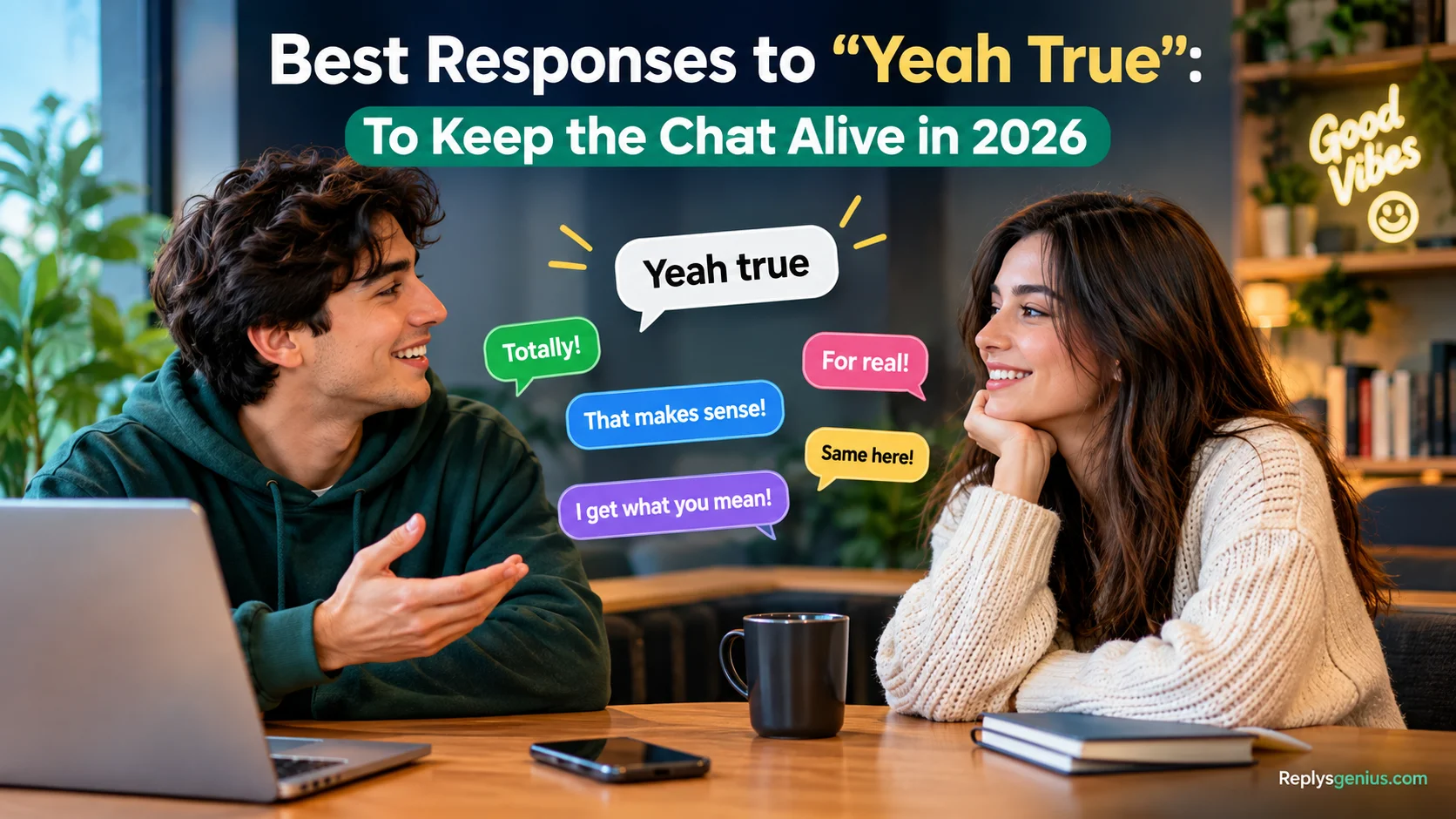
Best Responses to “Yeah True”: To Keep the Chat Alive in 2026 give you simple ways to keep a natural conversation moving without awkward pauses. Knowing how to respond to yeah becomes easier when you consider the context, tone, mood, and relationship. A yeah true often shows agreement, but the reply can determine whether the conversation continues or becomes awkward. A dry yeah might suggest boredom, hesitation, or nothing to say, so avoid overthinking and match the other person’s energy. For a short answer, try exactly, facts, glad you agree, right, I knew you’d see it, or that’s what I’m saying to sound natural and keep the chat from feeling forced.
The best yeah replies should add something useful instead of repeating the same message. When someone completely agrees and the conversation just hit the pause button, clever replies, playful banter, or a smart reply can invite another thought. You can ask what they think next or connect the topic to something personal. This approach works well in texts, Instagram, DMs, work chats, and casual talking with a crush, best friend, coworker, or family member. The aim is to keep the chat going while making it fun, engaging, and memorable, with enough personality to encourage a genuine response.
A simple guide is to shape your response around the vibe rather than searching for one perfect line. A funny reply to yeah can bring humor, while a flirty reply to yeah can add flirtation and confidence when the moment feels right. A cute reply to yeah suits a warm, relaxed exchange. If the chat feels like dull texting, use a question, share a personal detail, or find practical ways to open a fresh topic. These small changes can help you make someone laugh, sound cooler, prevent awkward silence, and create better chats without forcing the conversation.
1. “Exactly! You Get It.”
Sometimes the easiest way to respond to “Yeah true” is to acknowledge the agreement while adding a little personality. “Exactly! You get it” makes the other person feel understood and gives the conversation a warmer tone. It works especially well when you’ve just shared an opinion, observation, or relatable thought that they clearly agree with.
When to use
Use it when you want to show that you appreciate their agreement.
When not to use
Avoid it if the conversation is formal or the other person has already repeated the same agreement several times.
Example
You: “Some days, staying home is better than going out.”
Them: “Yeah true.”
You: “Exactly! You get it. 😂”
2. “Right? I Knew You’d Agree.”
This response adds confidence and a playful sense of familiarity. It can make a basic agreement feel like part of an ongoing connection. Instead of simply accepting “Yeah true,” you’re suggesting that you understand the other person’s personality or perspective. That small twist can encourage them to respond with something more detailed.
When to use
Use it with friends or someone you already have comfortable chemistry with.
When not to use
Don’t use it with someone you barely know because it may sound overly familiar.
Example
Them: “Yeah true.”
You: “Right? I knew you’d agree with me on that one.”
3. “So What Would You Do?”
A question is one of the simplest ways to keep the chat alive after someone says “Yeah true.” This particular question shifts the conversation from agreement to personal opinion. It invites the other person to explain themselves rather than giving another one-word response. That makes it useful when you want a more meaningful and interactive conversation.
When to use
Use it when the topic involves a decision, situation, or personal preference.
When not to use
Avoid it if the conversation is clearly casual and doesn’t call for a serious opinion.
Example
You: “I think changing jobs can be scary but exciting.”
Them: “Yeah true.”
You: “So what would you do if you got an amazing offer tomorrow?”
4. “What Made You Think That?”
This response turns a basic agreement into an opportunity to learn more about the person. It shows genuine curiosity instead of trying to force another topic. People often become more engaged when they feel that someone actually wants to understand their perspective. It’s particularly effective during deeper conversations about experiences, opinions, or everyday observations.
When to use
Use it when their agreement seems connected to a personal experience.
When not to use
Don’t use it if you’re discussing something extremely obvious or trivial.
Example
Them: “Yeah true. People really do change.”
You: “What made you think that?”
5. “We’re Definitely on the Same Page.”
This is a warm and natural response that confirms shared understanding. It can make a conversation feel more connected because you’re highlighting common ground. In texting, phrases like this work well when you want to maintain a friendly tone without making the exchange sound overly rehearsed.
When to use
Use it during conversations about shared opinions, interests, or experiences.
When not to use
Avoid repeating it too often because it can become predictable.
Example
You: “I’d rather have a quiet weekend than a packed schedule.”
Them: “Yeah true.”
You: “We’re definitely on the same page.”
6. “Okay, But Tell Me More.”
“Yeah true” can sometimes signal agreement without adding anything new. Instead of letting the chat fade, “Okay, but tell me more” gently encourages the other person to continue. It sounds interested rather than demanding. This makes it a useful response when they’ve mentioned something intriguing, surprising, emotional, or personally meaningful.
When to use
Use it when the other person has introduced an interesting topic.
When not to use
Don’t use it when there’s nothing substantial to expand upon.
Example
Them: “Yeah true. That trip changed my whole perspective.”
You: “Okay, but tell me more. What happened?”
7. “Haha, Exactly!”
Sometimes a conversation doesn’t need a deep question. A short, energetic response can keep the mood relaxed. “Haha, exactly!” adds enthusiasm and signals that you’re enjoying the exchange. It’s particularly suitable for casual texting, group chats, social media conversations, and messages between friends who already understand each other.
When to use
Use it when the conversation is lighthearted or funny.
When not to use
Avoid it when the discussion is serious or emotional.
Example
Them: “Some people really overthink everything.”
You: “Yeah true.”
You: “Haha, exactly! My brain never takes a day off. 😂”
8. “Now You’re Making Sense.”
This playful reply adds personality without being too complicated. Depending on the relationship, it can sound teasing, humorous, or genuinely approving. It works especially well when you and the other person have a relaxed texting style. The playful wording also gives them an easy opportunity to joke back.
When to use
Use it with friends or someone comfortable with playful banter.
When not to use
Avoid it if your relationship is formal or sensitive.
Example
Them: “Yeah true, sleeping in is basically self-care.”
You: “Now you’re making sense. 😂”
9. “What Else Do You Think?”
If you want to move beyond simple agreement, this question gives the other person room to develop their thoughts. It’s a useful conversation starter because it doesn’t force a specific answer. Instead, it encourages them to add another perspective, example, or opinion. This can naturally lead to a longer and more engaging chat.
When to use
Use it when discussing opinions, trends, relationships, school, work, or everyday life.
When not to use
Avoid it when the conversation is already winding down naturally.
Example
Them: “Yeah true, social media can be exhausting.”
You: “What else do you think makes it so exhausting?”
10. “You Know What? I Agree Too.”
This response creates a sense of mutual understanding while keeping the tone conversational. It’s especially useful when the other person has made a point that you initially weren’t sure about. Instead of simply saying “same,” you acknowledge their perspective and add a small shift in the conversation.
When to use
Use it when you genuinely agree with their point.
When not to use
Don’t pretend to agree just to keep someone talking.
Example
Them: “Sometimes taking a break is more productive than forcing yourself to work.”
You: “Yeah true.”
You: “You know what? I agree too. I’ve learned that the hard way.”
11. “Okay, We Need to Talk About That.”
This response creates curiosity and can immediately give the conversation a new direction. It’s particularly effective when the previous message contains something surprising, controversial, funny, or interesting. The phrase naturally encourages the other person to ask what you mean or continue explaining their point.
When to use
Use it when the topic has enough substance for further discussion.
When not to use
Avoid it if you don’t actually have anything else to say.
Example
Them: “Yeah true. I think pineapple on pizza is actually good.”
You: “Okay, we need to talk about that. 😂”
12. “Same Here. What’s Your Take on This?”
This response combines agreement with a follow-up question, which is a powerful way to prevent a conversation from becoming repetitive. Saying “same here” establishes common ground, while the question creates an opening for the other person to contribute. It feels natural in casual texting and can transition smoothly into a longer discussion.
When to use
Use it when you share their opinion but still want to explore the topic.
When not to use
Avoid stacking too many questions together.
Example
Them: “Yeah true, weekends disappear way too fast.”
You: “Same here. What’s your take on this? Should weekends be three days?”
Read More: 25 Situational Replies: That Work in Almost Any Conversation (With Examples)
13. “You’re Not Wrong.”
“You’re not wrong” is a casual phrase that communicates agreement without sounding overly enthusiastic. It can be especially effective when the other person makes a humorous observation or a point that’s difficult to argue with. The relaxed wording keeps the conversation natural and gives you room to add another thought afterward.
When to use
Use it for casual opinions and relatable observations.
When not to use
Avoid it when you want to express strong enthusiasm or emotional support.
Example
Them: “Yeah true. Mondays should honestly be optional.”
You: “You’re not wrong. 😂”
14. “That’s Exactly What I Was Thinking.”
This response creates an immediate feeling of connection. When someone says “Yeah true,” telling them that you were thinking the same thing reinforces the shared perspective. It can also make conversations with friends, classmates, or potential romantic interests feel more personal without becoming overly intense.
When to use
Use it when their message genuinely matches your thoughts.
When not to use
Don’t overuse it simply to sound agreeable.
Example
Them: “People remember how you treat them.”
You: “Yeah true.”
You: “That’s exactly what I was thinking.”
15. “Speaking of That…”
“Speaking of that…” is a classic conversational bridge. It helps you introduce a related topic without making the transition feel random. If the other person has responded with “Yeah true” and you don’t want the conversation to stop, connect their statement to something else that naturally interests both of you.
When to use
Use it when you have a related story, question, or topic.
When not to use
Avoid unrelated topic changes that feel forced.
Example
Them: “Yeah true, I haven’t traveled in forever.”
You: “Speaking of that, have you decided where you’d go next?”
16. “Okay, Random Question…”
Sometimes the best way to rescue a dry conversation is to introduce something unexpected. “Okay, random question…” creates curiosity because the other person doesn’t know what’s coming. It can lead to funny hypothetical questions, personal preferences, travel ideas, food debates, or interesting “what if” scenarios.
When to use
Use it when the existing topic has naturally slowed down.
When not to use
Avoid random questions during serious or emotionally sensitive discussions.
Example
Them: “Yeah true.”
You: “Okay, random question: if you could live anywhere for a year, where would you go?”
17. “You Read My Mind.”
This is a fun response when someone agrees with something you were already thinking. It creates a playful sense of connection and works especially well between close friends or people who share similar humor. Because it’s short, you can easily follow it with another question or joke to keep the exchange moving.
When to use
Use it when their response perfectly matches your own thoughts.
When not to use
Avoid it when there’s no actual connection between your opinions.
Example
Them: “Yeah true, we definitely need more sleep.”
You: “You read my mind. I was about to say the exact same thing.”
18. “Let’s Be Honest…”
“Let’s be honest…” can create a natural shift toward humor or a more genuine conversation. It signals that you’re about to say what you really think. This response works well when you want to move beyond surface-level agreement and make the chat feel more authentic.
When to use
Use it when you want to add a candid observation or playful truth.
When not to use
Avoid it if the topic is sensitive and your wording could sound confrontational.
Example
Them: “Yeah true, I should probably stop procrastinating.”
You: “Let’s be honest… we both know you’re going to procrastinate again. 😂”
19. “So, What’s the Story Behind That?”
This response is excellent when “Yeah true” follows a statement that seems connected to a personal experience. Asking for the story makes the conversation more personal and memorable. Instead of exchanging generic opinions, you’re inviting the other person to share an experience, which can create stronger conversational momentum.
When to use
Use it when their comment sounds like it has a story behind it.
When not to use
Don’t pressure someone to explain something personal if they seem uncomfortable.
Example
Them: “Yeah true. I don’t trust people easily.”
You: “So, what’s the story behind that?”
20. “Fair Enough. What Happened Next?”
“Fair enough” acknowledges the other person’s perspective without necessarily saying that you completely agree with everything. Adding “what happened next?” turns that acknowledgment into an invitation to continue. This is especially useful when someone is telling a story, describing an experience, or explaining a situation.
When to use
Use it during storytelling or when someone is explaining an event.
When not to use
Avoid it if there is no story or sequence of events to continue.
Example
Them: “Yeah true, I almost left the party early.”
You: “Fair enough. What happened next?”
21. “Haha, But Seriously…”
This response lets you move smoothly from humor into a more meaningful question. It’s useful when you’ve been joking around but suddenly want to understand what the other person actually thinks. The combination of humor and sincerity can make the conversation feel natural instead of abruptly serious.
When to use
Use it when you want to shift from joking to genuine conversation.
When not to use
Don’t use it repeatedly because the transition can start sounding scripted.
Example
Them: “Yeah true, I’m terrible at making decisions.”
You: “Haha, but seriously… what’s something you’ve been thinking about lately?”
22. “I Knew There Was a Reason We Get Along.”
This is a warmer and slightly more personal response. It highlights shared opinions while adding a friendly compliment. Depending on your relationship, it can sound completely platonic or carry a subtle flirty texting vibe. That flexibility makes it useful for conversations where you already have some chemistry.
When to use
Use it with friends, close acquaintances, or someone you’re comfortable teasing.
When not to use
Avoid it if the relationship is strictly formal.
Example
Them: “Yeah true, I’d rather stay in tonight.”
You: “I knew there was a reason we get along. 😂”
23. “Now I’m Curious…”
Curiosity is one of the strongest tools for keeping a conversation moving. This response tells the other person that their comment caught your attention. You can then follow it with a question that encourages a longer answer. It feels natural because you’re responding directly to what they said rather than changing the subject randomly.
When to use
Use it when their statement sparks genuine interest.
When not to use
Don’t use it as a filler if you have no actual question.
Example
Them: “Yeah true, I’d never move back to my hometown.”
You: “Now I’m curious… what made you feel that way?”
24. “And That’s Why I Asked You.”
This response works when you intentionally brought up a topic because you wanted the other person’s opinion. It can make them feel that their perspective matters. Rather than allowing “Yeah true” to end the exchange, you can explain why you asked and invite them to elaborate.
When to use
Use it when you genuinely wanted their perspective.
When not to use
Avoid it if you asked the question casually and don’t have anything else to discuss.
Example
You: “Do you think people should take more breaks from social media?”
Them: “Yeah true.”
You: “And that’s why I asked you. I wanted to know what you actually think about it.”
25. “Okay, Now Give Me Your Honest Opinion.”
When you really want to keep the chat alive, this response directly invites the other person to share more. It works especially well when the conversation involves preferences, relationships, plans, decisions, or an interesting debate. The phrase “honest opinion” can make the exchange feel more personal while encouraging a thoughtful answer.
When to use
Use it when you genuinely want their perspective.
When not to use
Avoid sounding demanding, especially with someone you don’t know well.
Example
Them: “Yeah true, everyone handles things differently.”
You: “Okay, now give me your honest opinion. What would you do in that situation?”
How to Choose the Right Response to “Yeah True”
The best reply depends on the mood, relationship, and topic. You don’t need to send a complicated message every time someone says “Yeah true.” A short response can work beautifully when the conversation is casual, while an open-ended question is better when you want a deeper exchange.
| Situation | Response Style | Example |
| Casual chat | Friendly | “Exactly! You get it.” |
| Funny conversation | Playful | “You’re not wrong. 😂” |
| Deep conversation | Curious | “What made you think that?” |
| New person | Neutral | “What else do you think?” |
| Close friend | Teasing | “Now you’re making sense.” |
| Crush | Warm/flirty | “I knew there was a reason we get along.” |
| Storytelling | Engaging | “What happened next?” |
The main goal isn’t to find the perfect sentence. It’s to respond in a way that gives the other person something to work with. A good follow-up question, playful observation, or genuine reaction can turn a one-line exchange into a real conversation.
FAQs
What does “Yeah True” usually mean?
“Yeah True” usually shows agreement with what someone has said. Depending on the context, tone, and mood, it can also be a short response when someone has nothing to say.
How should I respond to “Yeah True”?
You can reply with “Exactly,” “Facts,” “Glad you agree,” or “That’s what I’m saying.” If you want to keep the chat going, add a question or another thought.
What is a funny reply to “Yeah True”?
A funny reply to yeah can use light humor or playful banter. Try something like, “Finally, we agree on something!” to make the conversation more relaxed.
What is a flirty reply to “Yeah True”?
A flirty reply to yeah can add gentle flirtation without sounding forced. For example, “See? You already agree with me. We’re off to a good start.”
How can I avoid awkward silence after “Yeah True”?
To avoid awkward silence, ask a simple question, share a personal detail, or introduce a fresh topic. This can turn a short answer into a more engaging conversation.
Conclusion
The right responses to yeah true depend on the relationship, vibe, and situation. A simple exactly or facts works for quick agreement, while funny replies, cute replies, and flirty replies can add more personality when the setting feels appropriate. Instead of overthinking, focus on giving the other person something easy and natural to respond to.
Whether you’re texting a crush, best friend, coworker, or family member, a thoughtful reply can help keep the chat going. Use clever replies, playful banter, or a simple question to create better chats and make the exchange feel less like dull texting. The goal isn’t to force a conversation but to give it a natural reason to continue.