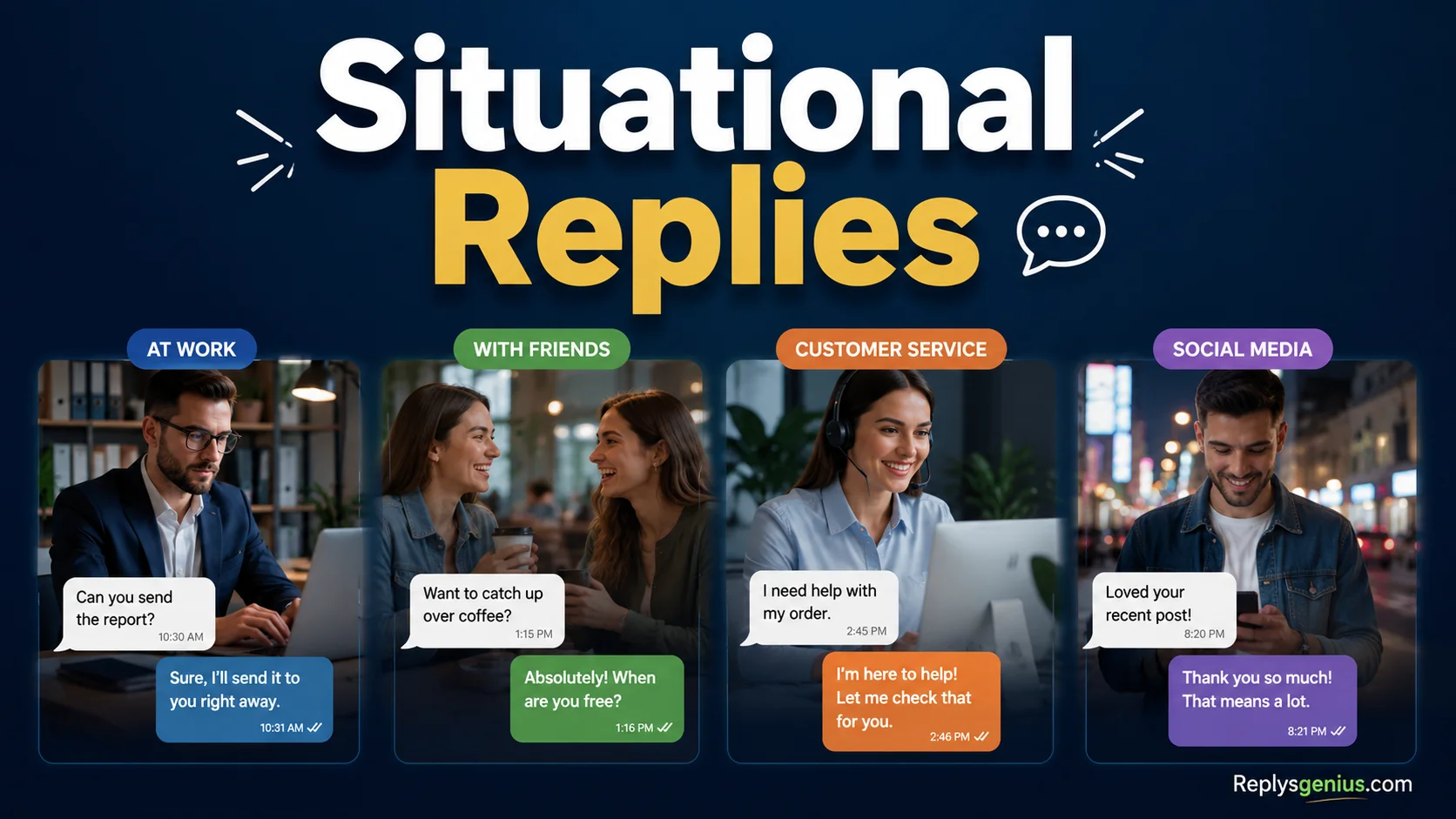
Situational Replies: That Work in Almost Any Conversation help you handle everyday conversation with the right tone, whether you need a short reply, casual reply, or text-ready reply.When someone asks “What’s going on?”, your context, audience, and tone matter. In texting, online chat, social media, group chats, and text messages, a quick response like “Not much, just surviving the day” can become a conversation starter instead of helping end the conversation. A friendly and natural answer works for small talk, while genuine curiosity or quiet concern may need warmer wording that keeps the conversation flow smooth and avoids an awkward moment.
The same approach works when a friend, best friend, crush, coworker, or family member says “I’m busy.” You might choose a clever reply, witty reply, funny response, flirty reply, cute reply, or professional reply, depending on the situation. A playful response can add humor, banter, or teasing, while a sarcastic response or savage response can flip the vibe when the audience understands your sarcasm. For workplace conversation, workplace communication, professional communication, and family communication, respectful, polite, and appropriate wording is usually safer. In personal conversation, romantic conversation, or online conversation, a little wit, flirting, personality, and confidence can create an engaging response without becoming rude or over-the-top.
For tricky, awkward, or pressured moments, especially questions about relationship status, salary, future plans, lifestyle choices, career, finances, or personal information, a lighthearted answer can help you protect your privacy while staying in control. A smart reply, clever comeback, or witty answer can demonstrate social skills, self-confidence, grace, and dignity while respecting personal boundaries, social boundaries, and comfort zones. When navigating sensitive questions or uncomfortable questions, the right words, timing, wording, and communication style can shift the mood instantly and strengthen your connection with the other person. These creative, confident ways to respond can support flirty responses, cute text message replies, workplace-friendly humor, conversation starters, keeping conversation going, social connection, and relationship building through greater conversational flexibility.
1. “That Makes Sense” When You Want to Show Understanding
Sometimes the best response isn’t complicated. Saying “That makes sense” tells the other person that you understand their explanation without taking over the conversation. It works especially well when someone has explained a decision, opinion, problem, or personal situation. This simple reply keeps communication open and encourages them to continue talking.
When to use
Use it after someone explains their reasoning or shares something you understand.
When not to use
Avoid it when the situation requires deeper emotional support or when you genuinely disagree.
Example
Them: “I decided to stay home because I needed some rest.”
You: “That makes sense. You’ve had a busy week.”
2. “I Get What You Mean” for Casual Conversations
“I get what you mean” sounds natural in everyday communication because it acknowledges another person’s point without making the conversation overly formal. It can work in texting, social media messages, group chats, and face-to-face conversations. The phrase also leaves room for you to add your own thoughts afterward.
When to use
Use it when you understand someone’s point or perspective.
When not to use
Don’t use it if you’re confused about what they’re actually saying.
Example
Them: “I like the idea, but I think we need more time.”
You: “I get what you mean. We shouldn’t rush it.”
3. “Thanks for Letting Me Know” as a Polite Response
When someone gives you information, “Thanks for letting me know” is a reliable response. It works in professional emails, workplace conversations, personal messages, and everyday situations. It acknowledges the information while keeping your tone polite and neutral. You can also make it warmer by adding a short sentence about what you’ll do next.
When to use
Use it when someone updates you, shares information, or tells you about a change.
When not to use
Avoid using it alone when the person is clearly looking for emotional support.
Example
Them: “The meeting has been moved to Thursday.”
You: “Thanks for letting me know. I’ll update my calendar.”
4. “I Appreciate That” When Someone Helps You
“I appreciate that” is useful when you want to show gratitude without sounding overly formal. It can respond to a favor, compliment, supportive message, helpful suggestion, or thoughtful gesture. The phrase feels genuine because it focuses on the effort someone made. In a close relationship, you can make it warmer by adding a personal sentence.
When to use
Use it after someone helps, supports, compliments, or considers you.
When not to use
Don’t use it sarcastically unless the context clearly supports that tone.
Example
Them: “I can send you the notes from today’s meeting.”
You: “I appreciate that. That’ll really help.”
5. “No Worries” to Keep Things Relaxed
“No worries” is one of the most flexible casual replies in modern conversation. You can use it after someone apologizes, thanks you, changes plans, or asks for a small favor. Its relaxed tone can prevent minor situations from becoming unnecessarily serious. Still, context matters because important issues may require a more thoughtful response.
When to use
Use it for minor mistakes, small inconveniences, or casual requests.
When not to use
Avoid it when someone is discussing a serious problem that deserves empathy.
Example
Them: “Sorry, I forgot to send that yesterday.”
You: “No worries. Just send it when you get a chance.”
6. “That Sounds Good” When You Agree With a Plan
When someone proposes an idea, “That sounds good” gives you a simple way to show agreement. It’s especially useful when making plans, discussing schedules, choosing activities, or responding to suggestions. You can personalize the reply by mentioning the specific part you like, which makes the conversation sound more engaged and less automatic.
When to use
Use it when you genuinely like or accept a suggestion.
When not to use
Don’t use it if you need more information before agreeing.
Example
Them: “How about we meet for coffee around six?”
You: “That sounds good. Six works for me.”
7. “Let Me Think About It” When You Need Time
You don’t always need to answer immediately. “Let me think about it” gives you breathing room without sounding dismissive. It’s useful when someone asks for a decision, opinion, commitment, or response that deserves consideration. This phrase can also help you avoid giving an answer you may regret later.
When to use
Use it when you need time to consider your response.
When not to use
Avoid repeatedly using it when the other person needs a clear answer immediately.
Example
Them: “Do you want to join us this weekend?”
You: “Let me think about it and I’ll get back to you.”
8. “I’m Not Sure Yet” When You Don’t Have an Answer
Being honest about uncertainty is often better than inventing an answer. “I’m not sure yet” communicates that you need more information or time. It works in personal conversations, school discussions, workplace settings, and casual chats. You can follow it with a timeframe if you know when you’ll have a clearer answer.
When to use
Use it when you genuinely don’t know the answer or haven’t decided.
When not to use
Don’t use it to avoid every difficult conversation.
Example
Them: “Are you definitely coming tomorrow?”
You: “I’m not sure yet, but I’ll let you know tonight.”
9. “I See Your Point” for Respectful Disagreement
You can disagree with someone without turning the conversation into an argument. “I see your point” acknowledges their reasoning while leaving space for a different opinion. This makes it useful for discussions involving preferences, decisions, work ideas, and everyday disagreements. The key is to follow it with your actual perspective if one is needed.
When to use
Use it when you understand someone’s reasoning, even if you disagree.
When not to use
Avoid it if you haven’t actually understood their argument.
Example
Them: “I think we should launch it now.”
You: “I see your point, but I think one more test would help.”
10. “That’s a Good Question” When You Need a Moment
“That’s a good question” works in many conversations because it recognizes the other person’s curiosity while giving you a moment to organize your thoughts. It’s particularly useful in professional discussions, interviews, classrooms, and serious conversations. Just make sure you follow it with a meaningful response rather than using it as a way to avoid answering.
When to use
Use it when someone asks something thoughtful or unexpected.
When not to use
Don’t repeat it for every question because it can start sounding scripted.
Example
Them: “Why did you choose that approach?”
You: “That’s a good question. I chose it because it saves time.”
11. “I’m Glad to Hear That” for Positive News
When someone shares good news, “I’m glad to hear that” shows genuine interest without making the conversation about you. It works for personal achievements, improved circumstances, successful plans, and positive updates. You can make the response warmer by congratulating them or asking a follow-up question about what happens next.
When to use
Use it when someone shares positive or encouraging news.
When not to use
Avoid a flat delivery if the news is especially meaningful to the person.
Example
Them: “I finally finished my project!”
You: “I’m glad to hear that. You’ve worked really hard on it.”
12. “I’m Sorry You’re Dealing With That” for Difficult Moments
When someone shares a problem, you don’t always need to solve it. Sometimes acknowledging their experience is the most appropriate response. “I’m sorry you’re dealing with that” communicates empathy without pretending you know exactly how they feel. It can be followed by an offer to listen or help if appropriate.
When to use
Use it when someone describes stress, disappointment, frustration, or a difficult situation.
When not to use
Don’t immediately turn the conversation into advice unless they want advice.
Example
Them: “Work has been really stressful lately.”
You: “I’m sorry you’re dealing with that. If you want to talk about it, I’m here.”
Read More: 25 Responses To A Thank You Note For Students: You’ll Love in 2026 (With Examples)
13. “What Happened?” to Keep the Conversation Going
A short question like “What happened?” can encourage someone to explain more. It’s especially useful when their message sounds incomplete, emotional, surprising, or confusing. Your tone matters, though. A curious and caring delivery feels supportive, while an impatient tone can make the same words sound demanding.
When to use
Use it when someone hints at a story, problem, or unexpected event.
When not to use
Don’t push for details if they clearly don’t want to share.
Example
Them: “Today was such a strange day.”
You: “Really? What happened?”
14. “Tell Me More” When You’re Interested
“Tell me more” is a simple conversation starter that shows you’re listening. It can be used after someone mentions a new hobby, exciting experience, relationship update, project, or personal goal. Unlike a generic “okay,” this response encourages the person to expand on their story and can make conversations feel more natural.
When to use
Use it when you genuinely want additional details.
When not to use
Avoid saying it when you’re distracted or don’t have time to listen.
Example
Them: “I started learning photography.”
You: “That’s interesting. Tell me more.”
15. “What Do You Think?” When You Want Their Opinion
Sometimes a good conversation requires giving the other person space to speak. “What do you think?” is a versatile follow-up that works after sharing an idea, making a suggestion, or discussing a problem. It turns a one-sided exchange into a two-way conversation and can help you understand the other person’s perspective.
When to use
Use it when their opinion genuinely matters to the conversation.
When not to use
Don’t ask if you’re unwilling to consider their answer.
Example
You: “I’m thinking about changing the schedule. What do you think?”
16. “That’s Interesting” for Unexpected Information
“That’s interesting” can keep a conversation moving when someone shares information you didn’t expect. It’s flexible enough for casual conversations, work discussions, and online chats. However, because the phrase can sometimes sound vague, adding a follow-up question makes it much more engaging and shows that you’re actually interested.
When to use
Use it when something genuinely catches your attention.
When not to use
Avoid using it mechanically after every statement.
Example
Them: “I’ve been studying Japanese for six months.”
You: “That’s interesting. What made you start learning it?”
17. “You’re Right” When You Recognize a Valid Point
Admitting when someone has made a valid point can strengthen communication. “You’re right” is direct, natural, and useful when you recognize that your previous assumption or statement was incorrect. You can add a brief explanation when needed. A sincere acknowledgment usually works better than a long defensive explanation.
When to use
Use it when the other person has made a correct or convincing point.
When not to use
Don’t say it simply to end an argument if you don’t mean it.
Example
Them: “We did agree to check the details first.”
You: “You’re right. I should’ve checked them before sending it.”
18. “Fair Enough” for a Calm Response
“Fair enough” is a conversational phrase that signals acceptance of another person’s reasoning. It doesn’t necessarily mean you completely agree. Instead, it shows that you recognize their position as understandable. Because it’s casual, it works particularly well in friendly conversations, texting, and low-stakes disagreements.
When to use
Use it when someone gives a reasonable explanation or perspective.
When not to use
Avoid it in highly emotional situations where stronger empathy is needed.
Example
Them: “I’d rather wait until tomorrow.”
You: “Fair enough. We can do it tomorrow.”
19. “Good Point” When Someone Adds Useful Information
A quick “good point” can make conversations feel collaborative. It tells the other person that their idea contributed something useful. This response works particularly well during brainstorming, planning, discussions, and friendly debates. You can make it more specific by explaining exactly what you found useful about their point.
When to use
Use it when someone identifies something you hadn’t considered.
When not to use
Don’t use it as empty praise when you haven’t considered what they said.
Example
Them: “We should also check the deadline before changing the plan.”
You: “Good point. I hadn’t considered the deadline.”
20. “I’ll Keep That in Mind” for Helpful Advice
When someone gives you advice, “I’ll keep that in mind” acknowledges their suggestion without promising that you’ll definitely follow it. This makes the phrase useful when you appreciate the input but still need to make your own decision. It works in professional conversations as well as personal discussions.
When to use
Use it when someone offers advice, feedback, or a suggestion.
When not to use
Avoid it if you already know you have no intention of considering their advice.
Example
Them: “Try starting earlier next time so you have more time to review everything.”
You: “I’ll keep that in mind. Thanks.”
21. “Sounds Like a Plan” for Making Arrangements
“Sounds like a plan” is a friendly way to confirm an arrangement. It works particularly well in texting and casual conversations because it feels more natural than a formal “I agree.” You can use it after deciding where to meet, when to call, what to do, or how to handle a simple task.
When to use
Use it when you’re comfortable with the proposed plan.
When not to use
Don’t use it if important details are still unclear.
Example
Them: “Let’s meet at the café at seven and decide from there.”
You: “Sounds like a plan.”
22. “I’ll Check and Get Back to You” for Uncertain Answers
When you don’t have the information someone needs, “I’ll check and get back to you” provides a clear next step. This is especially valuable in workplace conversations, customer communication, school projects, and organized group activities. It sounds more responsible than guessing and lets the other person know what to expect.
When to use
Use it when you need to verify information before responding.
When not to use
Don’t promise to follow up if you don’t intend to do so.
Example
Them: “Do you know whether the deadline has changed?”
You: “I’m not sure. I’ll check and get back to you.”
23. “I Understand” When Someone Needs Acknowledgment
“I understand” can be a powerful response when someone explains a concern, boundary, decision, or personal preference. However, it should communicate genuine acknowledgment rather than automatic agreement. If the situation is sensitive, adding a sentence that recognizes their perspective can make the reply feel more thoughtful and respectful.
When to use
Use it when someone explains how they feel, what they need, or why they made a decision.
When not to use
Avoid claiming understanding when you genuinely need clarification.
Example
Them: “I need some time to myself tonight.”
You: “I understand. Take the time you need.”
24. “Thanks for Being Honest” When Someone Is Direct
Honest communication can sometimes feel uncomfortable, especially when the message isn’t what you hoped to hear. “Thanks for being honest” recognizes the person’s openness without requiring you to agree with everything they said. It can help keep difficult conversations respectful and prevent an honest disagreement from becoming unnecessarily hostile.
When to use
Use it when someone gives you sincere feedback, explains their feelings, or tells you something difficult.
When not to use
Don’t use it sarcastically during an argument.
Example
Them: “I don’t think this approach is working.”
You: “Thanks for being honest. Let’s talk about what could change.”
25. “I’m Here If You Need Me” for Supportive Conversations
When someone is going through a difficult moment, “I’m here if you need me” offers support without pressuring them to talk. It’s useful for friends, family members, coworkers, and anyone who may need some space. The strength of this response comes from giving the person a choice while making your support clear.
When to use
Use it when someone seems upset, overwhelmed, disappointed, or uncertain.
When not to use
Avoid making promises of support that you aren’t prepared to keep.
Example
Them: “I don’t really want to talk about it right now.”
You: “That’s okay. I’m here if you need me.”
FAQs
What are situational replies?
Situational replies are responses you choose based on the context, audience, tone, and type of conversation. They can be funny, friendly, professional, flirty, cute, or clever, depending on the situation.
How do I reply to “What’s going on?”
You can use a short reply, casual reply, or funny reply, such as “Not much, just surviving the day.” If you want to keep the conversation going, ask the other person, “What’s going on with you?”
How can I respond to “I’m busy”?
Choose your response according to the relationship and communication style. A playful response can add humor with a friend, while a professional reply is more appropriate for a coworker or workplace conversation.
How should I answer sensitive personal questions?
Use a smart reply or lighthearted answer when you want to protect your privacy without creating tension. Respect your personal boundaries, social boundaries, and comfort zones, especially when discussing finances, career, relationship status, or other personal information.
What makes a good situational response?
A good situational response matches the tone, shows confidence, and considers the audience. The right timing, wording, social skills, and conversational flexibility can make your answer feel natural while helping build connection and relationship building.
Conclusion
The right situational reply can turn an ordinary exchange into a smoother and more engaging conversation. Whether someone asks “What’s going on?”, says “I’m busy,” or brings up an awkward question, consider the context, audience, and tone before answering. A funny response, clever comeback, cute reply, flirty reply, or professional reply can work when it fits the moment. In more sensitive situations, respectful wording, confidence, grace, and clear personal boundaries help you stay comfortable and in control.
Ultimately, great communication isn’t about having one perfect answer for every person. It’s about having the flexibility to adjust your words to the situation. With good timing, personality, wit, and conversational flexibility, you can handle texting, online conversations, workplace communication, family discussions, and personal chats more naturally. The goal is simple: choose the right words, respect the other person, and use your response to keep the conversation going when you want to.